

Tooth pain can make even simple daily activities such as eating, drinking, and speaking uncomfortable. While occasional tooth sensitivity may not always indicate a serious dental problem, persistent pain, prolonged sensitivity to hot or cold foods, or swelling around the gums should never be ignored. These symptoms may indicate damage or infection involving the dental pulp, the soft tissue inside your tooth.
One commonly recommended dental procedures for treating an infected or inflamed dental pulp is Root Canal Treatment. It is designed to remove the affected tissue, clean and disinfect the root canal system, and seal the space to help preserve the natural tooth.
Although many people feel anxious when they hear the words “root canal”, modern endodontic techniques and appropriate pain management can make the procedure more comfortable for most patients.
However, successful treatment involves more than the procedure itself. Proper diagnosis, careful cleaning, effective sealing, a suitable final restoration, and good oral hygiene all contribute to long-term outcomes.
If you are considering Root Canal Treatment In Gurgaon, understanding the process and following your dentist’s instructions can help you make informed decisions about your dental health.
Let’s explore the important steps involved in achieving a predictable and effective root canal treatment.
What Is Root Canal Treatment?
Root Canal Treatment, also known as endodontic treatment, is a dental procedure used to treat infection or inflammation inside a tooth.
Every tooth contains a soft tissue called dental pulp, which consists of nerves, blood vessels, and connective tissue. The pulp helps in tooth development. However, once a tooth is fully developed, it can generally continue functioning even after the pulp has been removed.
When bacteria enter the pulp through deep tooth decay, cracks, fractures, or dental trauma, the tissue may become inflamed or infected. If left untreated, the infection can spread to the surrounding tissues and cause pain, swelling, or an abscess.
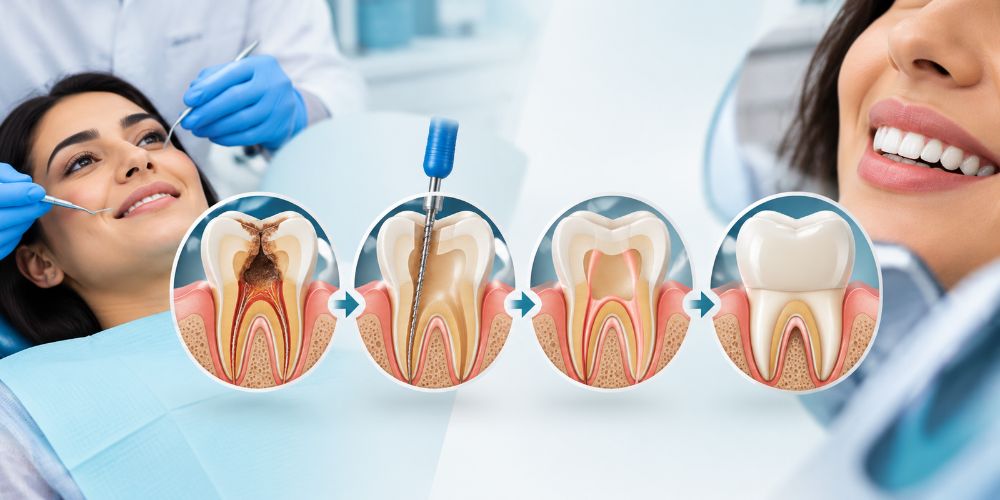
During root canal treatment, the dentist removes the affected pulp, cleans and shapes the internal canals, and fills and seals them with appropriate materials. The tooth is then restored to help protect it and restore its function.
The primary goal of root canal treatment is to eliminate infection or inflamed tissue while preserving the natural tooth whenever clinically appropriate.
7 Simple Steps for a Successful Root Canal Treatment
A carefully planned root canal procedure involves several important stages. Each step contributes to cleaning the canal system, reducing bacterial contamination, and protecting the treated tooth.
1. Accurate Diagnosis and Dental Examination
The first and most important step is identifying the actual cause of your tooth pain.
Not every painful tooth requires a root canal. Tooth sensitivity, cavities, gum problems, cracked teeth, and other dental conditions can produce similar symptoms.
Before recommending treatment, the dentist may perform:
- A detailed review of your dental and medical history.
- A clinical examination of the affected tooth.
- Pulp sensibility tests to assess the response of the tooth.
- Percussion and palpation tests to evaluate surrounding tissues.
- Dental X-rays to examine the roots and surrounding bone.
- Additional imaging, such as CBCT, when clinically indicated.
These assessments help determine whether root canal treatment is necessary and whether the tooth can be restored.
An accurate diagnosis also helps the dentist identify possible complications, such as additional canals, root fractures, or infection around the root tip.
Why is this step important?
A correct diagnosis helps avoid unnecessary treatment and allows the dentist to develop an appropriate treatment plan based on the tooth’s condition.
2. Maintaining Proper Isolation During Treatment
Once the treatment plan is established, the dentist prepares the affected tooth for the procedure.
One important step is isolating the tooth from saliva and oral bacteria. A dental dam, also known as a rubber dam, is commonly used for this purpose.
A rubber dam is a thin protective sheet placed around the tooth being treated. It helps:
- Keep saliva away from the treatment area.
- Reduce bacterial contamination.
- Prevent small instruments and materials from entering the mouth.
- Improve visibility and access for the dentist.
- Create a cleaner working environment.
Proper isolation is an important part of maintaining aseptic conditions during root canal treatment.
Why is this step important?
The root canal system is narrow and complex. Keeping the working area isolated helps reduce contamination and supports effective cleaning and sealing.
3. Effective Cleaning and Shaping of Root Canals
After administering appropriate local anaesthesia, the dentist creates an opening in the tooth to access the pulp chamber and root canals.
The infected or inflamed pulp tissue is carefully removed using specialised endodontic instruments.
The dentist then cleans and shapes the root canals to prepare them for filling.
This process may involve:
- Identifying the root canal openings.
- Determining the working length of the canals.
- Removing damaged pulp tissue and debris.
- Using suitable mechanical instruments.
- Irrigating the canals with appropriate disinfecting solutions.
- Cleaning the canal system while preserving as much healthy tooth structure as possible.
Modern rotary and reciprocating instruments may be used depending on the case and the dentist’s clinical approach.
Why is this step important?
Root canals contain small spaces and anatomical variations that may be difficult to clean. Thorough cleaning and appropriate shaping help reduce bacteria and prepare the canals for effective filling.
4. Thorough Irrigation and Disinfection
Mechanical cleaning alone may not remove all microorganisms and tissue debris from the root canal system. This is why chemical irrigation is an essential part of endodontic treatment.
Dentists use appropriate irrigating solutions to help disinfect the canals and remove debris from areas that instruments may not reach easily.
Sodium hypochlorite is commonly used in endodontics because it helps dissolve organic tissue and reduce microbial contamination. Other solutions, such as EDTA, may be used to help remove the inorganic component of the smear layer.
The choice, concentration, sequence, and delivery of irrigants depend on the clinical situation and established safety protocols.
Why is this step important?
Effective irrigation helps clean complex areas within the root canal system and supports the overall disinfection process.
5. Proper Filling and Sealing of the Root Canals
Once the root canals have been adequately cleaned, shaped, and prepared, they are filled with suitable root canal filling materials.
Gutta-percha is commonly used along with an appropriate dental sealer to fill and seal the prepared canals.
The dentist selects a suitable obturation technique based on the anatomy of the tooth and the treatment requirements.
The objective is to achieve an appropriate seal that helps prevent bacteria from re-entering the cleaned canal system.
Why is this step important?
Proper filling and sealing help maintain the result of the cleaning and disinfection process. Inadequate filling or sealing may contribute to persistent or recurrent infection.
6. Placement of a Suitable Final Restoration
Completing the root canal procedure does not mean that the tooth is fully protected.
A tooth that has undergone root canal treatment may be more vulnerable to fracture, particularly when it has lost a significant amount of natural tooth structure because of decay or previous restorations.
The dentist will assess the remaining tooth structure and recommend an appropriate restoration.
Depending on the condition of the tooth, this may include:
- A permanent dental filling.
- An onlay or other indirect restoration.
- A dental crown.
Back teeth, such as molars and premolars, often require cuspal coverage because of the chewing forces they experience. However, the need for a crown depends on the amount of remaining tooth structure, tooth position, and individual clinical findings.
Why is this step important?
A well-planned final restoration helps protect the treated tooth against fracture, restore chewing function, and reduce the risk of leakage or reinfection.
Delaying the recommended permanent restoration can compromise the long-term outcome.
7. Follow-Up Visits and Regular Dental Care
The final step is maintaining the treated tooth through appropriate follow-up and everyday oral hygiene.
After treatment, mild tenderness or discomfort may occur for a few days, particularly if the tissues around the tooth were inflamed before the procedure. This generally improves over time.
However, persistent or worsening pain, swelling, or other unusual symptoms should be reported to your dentist.
Follow these care recommendations:
- Brush twice daily using fluoride toothpaste.
- Clean between your teeth with dental floss or interdental brushes.
- Avoid chewing hard foods on the treated tooth until your dentist confirms it is safe.
- Get the recommended permanent restoration without unnecessary delay.
- Attend follow-up appointments as advised.
- Seek dental evaluation if pain, swelling, or bite discomfort continues.
Why is this step important?
Root canal treatment addresses the infection inside the tooth, but it does not make the tooth immune to future decay, gum disease, or fractures. Ongoing dental care remains essential.
Common Signs That You May Need Root Canal Treatment
Recognising early symptoms can help you seek dental attention before a problem becomes more complicated.
Some common signs associated with pulp inflammation or infection include:
- Persistent Toothache
Continuous or recurring tooth pain, especially without an obvious trigger, may indicate inflammation or infection inside the tooth.
- Prolonged Sensitivity to Hot and Cold
If pain continues even after the hot or cold stimulus has been removed, it may indicate significant pulp inflammation.
- Pain While Chewing or Biting
Discomfort when biting or applying pressure may be associated with inflammation around the root, a cracked tooth, or other dental problems.
- Swelling Around the Gums
Swelling near an affected tooth may indicate infection involving the surrounding tissues.
- Darkening or Discolouration of a Tooth
A tooth that becomes grey or darker than neighbouring teeth may have experienced pulp damage or loss of vitality.
- Pimple-Like Swelling on the Gums
A small bump near a tooth may indicate a draining dental abscess or sinus tract.
These symptoms do not automatically confirm that you need root canal treatment. A proper dental examination is necessary to determine the underlying cause.
If you experience facial swelling, fever, difficulty swallowing, or difficulty breathing associated with a dental infection, seek urgent medical or dental care.
How Long Does Root Canal Treatment Take?
The time required for root canal treatment depends on several factors, including:
- Which tooth is affected.
- The number and shape of the root canals.
- The extent of infection or inflammation.
- The complexity of the tooth’s anatomy.
- Whether additional procedures are required.
- Whether the treatment is performed in one or multiple visits.
Some cases can be completed in a single appointment, while others may require multiple visits.
For example, molars generally have more complex root canal systems than front teeth. Teeth with extensive infection or complicated anatomy may also require additional treatment time.
Your dentist can explain the expected treatment schedule after examining the tooth.
Is Root Canal Treatment Painful?
One of the biggest concerns patients have is whether root canal treatment causes pain.
Modern root canal treatment is generally performed under local anaesthesia to minimise discomfort during the procedure.
Most patients tolerate the treatment well. Some tenderness or sensitivity may occur afterwards, especially if there was significant inflammation or infection before treatment.
The level of discomfort varies depending on the condition of the tooth and individual pain sensitivity.
Your dentist may recommend appropriate pain-relief medication based on your medical history and clinical requirements.
It is important to communicate any discomfort during or after the procedure so that your dentist can assess it and provide suitable guidance.
Why Choose Professional Root Canal Treatment In Gurgaon?
Choosing appropriate dental care is important when dealing with tooth pain, pulp infection, or other endodontic problems.
If you are considering Root Canal Treatment In Gurgaon, look for a dental centre that follows a systematic approach to diagnosis, infection control, treatment planning, and tooth restoration.
Dr Gupta’s Dental Implant & Orthodontic Centre can be considered as the clinic name associated with this educational resource. Before choosing any dental provider, patients should evaluate the treating dentist’s qualifications, registration, relevant clinical experience, available diagnostic facilities, and treatment recommendations.
During your consultation, consider discussing:
- Whether root canal treatment is necessary.
- Whether the natural tooth can be preserved.
- The expected number of appointments.
- The need for a permanent filling or dental crown.
- Possible risks and alternatives.
- The estimated treatment costs.
- The follow-up care required.
A clear discussion helps patients understand their options and make informed decisions about their dental health.
Can a Tooth Last for Years After Root Canal Treatment?
A tooth treated with a root canal can continue functioning for many years, provided it receives appropriate restoration and ongoing care.
However, no dental treatment can guarantee that a tooth will last for a specific number of years.
Long-term outcomes depend on several factors, including:
- The original condition of the tooth.
- The quality of cleaning and sealing.
- The amount of remaining natural tooth structure.
- The type and quality of the final restoration.
- Oral hygiene practices.
- Regular dental examinations.
- The presence of habits such as teeth grinding.
Protecting the treated tooth with the restoration recommended by your dentist and maintaining good oral hygiene can help support its long-term function.
Frequently Asked Questions About Root Canal Treatment
1. What is the main purpose of Root Canal Treatment?
The main purpose of Root Canal Treatment is to remove infected or inflamed pulp tissue, clean and disinfect the root canal system, and seal it to help preserve the natural tooth.
2. How many visits are required for root canal treatment?
The number of visits depends on the tooth’s condition, canal anatomy, and complexity of the case. Some treatments can be completed in one appointment, while others require multiple visits.
3. Is Root Canal Treatment better than tooth extraction?
When a tooth is restorable, root canal treatment may help preserve the natural tooth and its chewing function. Extraction may be recommended if the tooth cannot be predictably restored. Your dentist can explain the benefits and limitations of both options.
4. How long does a root canal-treated tooth last?
A root canal-treated tooth can remain functional for many years. Its longevity depends on proper treatment, the quality of the final restoration, remaining tooth structure, and regular oral care. No specific lifespan can be guaranteed.
5. Is a dental crown necessary after root canal treatment?
Not every root canal-treated tooth requires a crown. However, crowns or other cuspal coverage restorations are often recommended for back teeth or teeth with significant structural damage. The decision depends on the individual tooth.
6. What should I avoid after root canal treatment?
Avoid chewing hard or sticky foods on the treated tooth until your dentist advises that it is safe, particularly if the tooth has a temporary restoration. Follow your dentist’s instructions and avoid delaying the permanent restoration.
7. Can root canal infection return?
Yes. Reinfection can occur if bacteria enter the tooth again through leakage, new decay, cracks, or other complications. In some cases, additional treatment may be necessary. Proper restoration and regular dental care help reduce these risks.
8. Where can I get Root Canal Treatment In Gurgaon?
When looking for Root Canal Treatment In Gurgaon, consider a dental centre that provides appropriate diagnostic assessment, follows infection-control protocols, explains treatment alternatives, and offers suitable restorative care. Dr Gupta’s Dental Implant & Orthodontic Centre is the clinic name featured in this article.
Final Thoughts
Successful Root Canal Treatment depends on a combination of accurate diagnosis, effective cleaning and disinfection, proper canal sealing, and a suitable final restoration.
Understanding each stage of the procedure can help reduce uncertainty and allow you to participate more confidently in decisions about your dental health.
If you are experiencing persistent tooth pain, prolonged sensitivity, swelling, or discomfort while chewing, do not ignore these symptoms. An appropriate dental examination can help identify the underlying problem and determine whether root canal treatment or another form of care is suitable.
At Dr Gupta’s Dental Implant & Orthodontic Centre, this topic highlights the importance of informed dental decisions, preserving natural teeth whenever appropriate, and maintaining long-term oral health.
Remember: Saving a natural tooth, when clinically possible, can be an important part of maintaining a healthy and functional smile.
Medically Reviewed By:
Dr. Ankur Gupta
BDS, MDS-Orthodontics
Haryana Dental Council Registration No. 1378A
Dr. Ankita Gupta
BDS, Implantologist
Haryana Dental Council Registration No. 2546A