

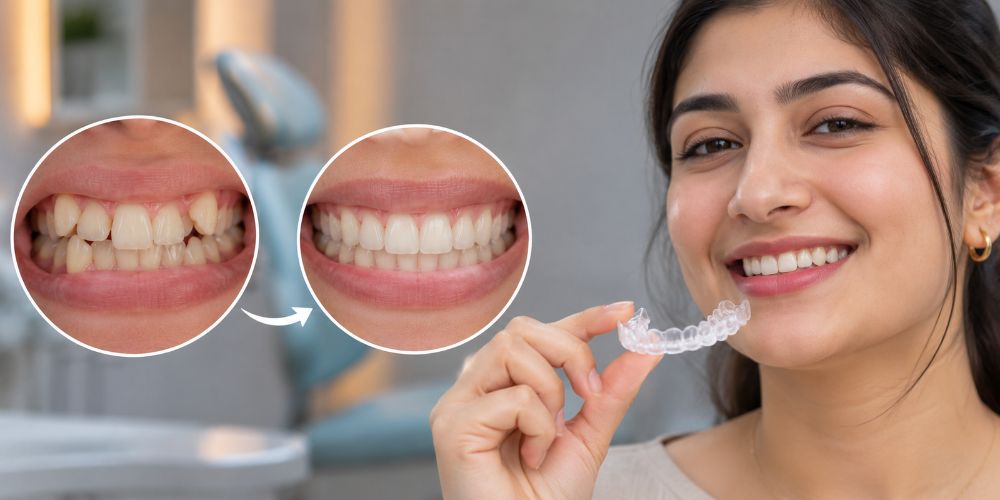
Crooked or misaligned teeth can affect more than just your smile. They may make chewing uncomfortable, create difficulty while cleaning between teeth, and sometimes affect your confidence when speaking or smiling. If you want straighter teeth without the noticeable appearance of traditional metal braces, clear aligners may be worth considering.
But do clear aligners really work for crooked teeth? The answer is yes. Clear aligners can effectively correct many common orthodontic problems, including crowded teeth, gaps, and certain bite irregularities. However, their effectiveness depends on the severity of misalignment, your dental condition, and how consistently you follow your orthodontist’s instructions.
With growing awareness of discreet orthodontic treatments, many people are exploring Clear aligners in Gurgaon as an alternative to conventional braces.
At Dr. Gupta’s Dental Implant and Orthodontic Centre, understanding your treatment options is an important first step towards making an informed decision about your dental health.
What Are Clear Aligners?
Clear aligners are transparent, removable dental trays specially designed to gradually move your teeth into better positions. They are made using digital dental scans or impressions and are customised according to your individual orthodontic requirements.
Unlike traditional braces, which use metal brackets and wires, clear aligners fit closely over your teeth and apply controlled pressure to guide them into their planned positions.
You receive a series of aligner trays, with each set designed to make small adjustments to your teeth. As you progress through the series, your teeth gradually move towards their planned alignment.
Clear aligners are popular because they are:
- Transparent and less noticeable than conventional braces.
- Removable while eating and drinking.
- Convenient for brushing and flossing.
- Custom-made for individual dental requirements.
- Suitable for several mild to moderate orthodontic conditions.
However, clear aligners are not suitable for every orthodontic problem. A professional dental examination is necessary before starting treatment.
Do Clear Aligners Really Work for Crooked Teeth?
Yes, clear aligners can straighten crooked teeth when the condition is suitable for aligner treatment.
They work by applying gentle, controlled forces to specific teeth. Each aligner is designed to produce a small amount of movement. By changing the trays according to your orthodontist’s instructions, your teeth gradually move into their planned positions.
Clear aligners can help correct several common dental alignment problems, including:
1. Crowded Teeth
Crowding occurs when there is insufficient space in the dental arch for all the teeth to fit properly. As a result, some teeth may overlap, twist, or appear uneven.
Clear aligners can help reposition crowded teeth in suitable cases by gradually improving their alignment and spacing.
2. Gaps Between Teeth
Some people have noticeable spaces between their teeth, particularly between the front teeth. These gaps may develop because of differences in tooth size, jaw structure, or other dental factors.
Clear aligners can gradually move selected teeth closer together to reduce or close suitable spaces.
3. Overbite
An overbite occurs when the upper front teeth overlap the lower front teeth more than expected.
Depending on its severity and underlying cause, clear aligner treatment may help improve certain types of overbite.
4. Underbite
An underbite occurs when the lower front teeth extend beyond the upper front teeth.
Some mild dental underbites may be treated with clear aligners. However, severe underbites caused by differences in jaw growth may require more comprehensive orthodontic or surgical treatment.
5. Crossbite
A crossbite occurs when some upper teeth sit inside the lower teeth rather than outside them when the jaws come together.
Selected crossbite cases may respond to clear aligner treatment, depending on the position of the teeth and the underlying jaw relationship.
6. Slightly Rotated Teeth
Teeth sometimes turn or rotate away from their natural position. Clear aligners can correct certain rotations, although significantly rotated teeth may be more challenging to move predictably.
The suitability of aligners depends on an individual’s orthodontic condition rather than simply how crooked the teeth look.
How Do Clear Aligners Straighten Crooked Teeth?
Clear aligner treatment follows a planned process. Each stage is designed to move your teeth gradually and safely.
Here is how the process generally works:
Step 1: Initial Dental Consultation
Your dentist or orthodontist examines your teeth, gums, bite, and overall oral health. They assess the type and severity of misalignment to determine whether clear aligners are appropriate.
Step 2: Digital Scanning and Treatment Planning
Digital scans or dental impressions are used to create a detailed representation of your teeth.
Depending on your condition, dental X-rays and photographs may also be required. These records help the orthodontist understand your dental structure and plan the required tooth movements.
Step 3: Customised Aligner Preparation
A series of transparent aligner trays is manufactured according to your personalised treatment plan.
Each tray is designed to move specific teeth by a small amount.
Step 4: Wearing Your Aligners
You wear your aligners for the recommended number of hours each day, usually around 20 to 22 hours, unless your orthodontist provides different instructions.
You generally remove them while eating, drinking anything other than water, and brushing your teeth.
Each aligner is replaced according to the prescribed schedule.
Step 5: Regular Dental Follow-Ups
Your orthodontist monitors your progress to check whether your teeth are moving as planned.
Sometimes, additional aligners or refinements may be necessary to achieve the intended results.
Step 6: Retainers After Treatment
Once your teeth reach their planned positions, retainers help maintain the results.
Wearing retainers as recommended is essential because teeth can gradually shift back towards their previous positions.
Clear Aligners vs Traditional Braces: Which Is Better?
Both clear aligners and traditional braces can help straighten crooked teeth. However, they differ in appearance, convenience, and suitability for different orthodontic conditions.
| Feature | Clear Aligners | Traditional Braces |
| Appearance | Transparent and discreet | More noticeable |
| Removability | Removable | Fixed to teeth |
| Eating | Removed during meals | Certain food restrictions |
| Oral hygiene | Easier to brush and floss | Requires additional cleaning |
| Comfort | Generally smooth, but may cause pressure | Brackets and wires may irritate cheeks |
| Compliance | Requires consistent patient cooperation | Less dependent on daily compliance |
| Complex cases | May have limitations | Often suitable for complex tooth movements |
Which option should you choose?
There is no single treatment that is best for everyone. Clear aligners may be suitable for people who want a discreet and removable option, while traditional braces may offer better control for certain complex orthodontic conditions.
Your orthodontist can recommend the appropriate treatment after evaluating your teeth and bite.
Who Is an Ideal Candidate for Clear Aligners?
Clear aligners may be suitable for teenagers and adults with fully erupted permanent teeth, depending on their dental development and ability to follow treatment instructions.
You may be a suitable candidate if you have:
- Mild to moderate crooked teeth.
- Minor to moderate dental crowding.
- Small gaps between teeth.
- Selected overbite or underbite problems.
- Certain types of crossbite.
- A preference for a less noticeable orthodontic treatment.
However, patients with severe skeletal jaw discrepancies, complex bite problems, significant tooth rotations, or certain other dental conditions may need traditional braces or a combination of treatments.
An orthodontic consultation is the best way to determine your eligibility.
How Long Does Clear Aligner Treatment Take?
The duration of clear aligner treatment depends on the complexity of your orthodontic condition and the amount of tooth movement required.
Some mild cases may take approximately 6 months, while more complicated cases may require 12 to 18 months or longer.
Factors that influence treatment duration include:
- Severity of crooked teeth.
- Amount of crowding or spacing.
- Complexity of bite correction.
- Number of teeth requiring movement.
- Consistency in wearing aligners.
- Need for additional refinements.
It is important to remember that every patient has different orthodontic needs. Your dentist or orthodontist can provide a more realistic treatment estimate after an examination.
What Are the Advantages of Clear Aligners?
Clear aligners offer several practical advantages for people looking for an alternative to traditional braces.
- Discreet Appearance
Their transparent design makes them less noticeable during everyday activities, including work, social interactions, and photographs.
- Removable Design
You can remove the trays during meals and while brushing and flossing, making everyday oral hygiene more convenient.
- Better Access for Cleaning
Since aligners are removable, you can brush and floss your teeth without navigating around fixed brackets and wires.
- No Food Restrictions During Meals
You can generally continue eating your preferred foods because the aligners are removed before meals.
- Customised Treatment
Each set is manufactured according to your individual treatment plan and intended tooth movements.
- Convenient Daily Routine
With proper planning and regular dental follow-ups, aligners can fit into many people’s daily routines.
Are There Any Disadvantages or Limitations of Clear Aligners?
Although clear aligners offer several benefits, they also have limitations that patients should understand before beginning treatment.
Some potential disadvantages include:
- They must be worn consistently to achieve the planned results.
- They may not be suitable for severe orthodontic problems.
- Temporary pressure or discomfort can occur when changing trays.
- Speech may feel slightly different during the initial adjustment period.
- Aligners can become lost, damaged, or misplaced.
- Additional refinement trays may be needed.
- Poor oral hygiene can increase the risk of dental problems.
Another important consideration is professional supervision. Using aligners without a proper dental examination and ongoing monitoring can lead to unintended tooth movement, bite problems, and other complications.
Therefore, treatment should always be planned and monitored by a qualified dental professional.
How Much Do Clear Aligners Cost in Gurgaon?
The cost of clear aligner treatment varies from one patient to another. There is no universal price because every treatment plan is different.
Some of the factors that influence the overall cost include:
- Severity of tooth misalignment.
- Complexity of the treatment plan.
- Number of aligner trays required.
- Type and brand of aligner system.
- Duration of treatment.
- Additional procedures or refinement requirements.
- Follow-up and retainer arrangements.
Before starting treatment, discuss the estimated cost, inclusions, follow-up schedule, and possible additional expenses with your dental professional.
A proper consultation helps you understand the treatment requirements and available options.
Why Is Professional Guidance Important for Clear Aligner Treatment?
Clear aligners may look simple, but moving teeth involves carefully controlled biological processes.
Before recommending treatment, a dental professional needs to assess your teeth, gums, bite, and supporting structures.
Professional supervision helps to:
- Identify underlying dental problems before treatment.
- Determine whether aligners are suitable.
- Plan appropriate tooth movements.
- Monitor treatment progress.
- Identify unexpected changes in tooth position or bite.
- Make adjustments when necessary.
- Plan retention after treatment.
Avoid choosing an aligner system based only on online advertisements or attractive pricing. A customised treatment plan and appropriate clinical monitoring are important for protecting your oral health.
Why Consider Dr. Gupta’s Dental Implant and Orthodontic Centre?
Choosing the right dental professional is an important part of your orthodontic journey.
At Dr. Gupta’s Dental Implant and Orthodontic Centre, patients can seek professional guidance regarding their dental alignment concerns and available orthodontic treatment options.
Whether you are dealing with crowded teeth, spacing issues, or other alignment concerns, an individual assessment can help determine whether clear aligners or traditional braces are more appropriate for your needs.
The focus should always be on understanding your dental condition, discussing suitable treatment options, and making an informed decision based on your oral health requirements.
If you are considering clear aligners in Gurgaon, a professional consultation can help you understand the expected treatment process, possible limitations, and long-term maintenance requirements.
Frequently Asked Questions About Clear Aligners
1. Do clear aligners work for severely crooked teeth?
Clear aligners can correct many mild to moderate alignment problems. However, severely crooked teeth and complex bite conditions may require traditional braces or a combination of orthodontic treatments. An orthodontic examination is necessary to determine suitability.
2. Can clear aligners straighten teeth without braces?
Yes. Clear aligners can straighten suitable cases without using conventional metal brackets and wires. They use a series of customised removable trays to gradually reposition teeth.
3. Are clear aligners painful?
Clear aligners generally cause pressure or mild discomfort, particularly when switching to a new set. This sensation is usually temporary as your teeth adjust to the planned movement. Severe or persistent pain should be discussed with your orthodontist.
4. How many hours should I wear clear aligners daily?
Most treatment plans recommend wearing aligners for approximately 20 to 22 hours per day. However, you should follow the specific instructions provided by your orthodontist.
5. Can I eat while wearing clear aligners?
No. You should generally remove your aligners before eating. Water is usually acceptable while wearing them, but sugary, hot, or coloured drinks should be avoided unless your orthodontist advises otherwise.
6. Do clear aligners give permanent results?
Clear aligners can produce lasting improvements in tooth alignment, but teeth may shift over time. Wearing retainers as recommended is essential to maintain your results.
7. Are clear aligners better than metal braces?
Neither option is universally better. Clear aligners offer a discreet and removable alternative, while traditional braces may provide better control in certain complex cases. The right choice depends on your individual orthodontic requirements.
8. Can adults use clear aligners for crooked teeth?
Yes. Adults can undergo clear aligner treatment if their teeth and gums are healthy and their orthodontic condition is suitable. Age alone does not automatically prevent someone from receiving aligner treatment.
9. Are clear aligners suitable for small gaps between teeth?
Yes. Clear aligners can help close many small to moderate gaps between teeth. However, the underlying reason for the gaps should be evaluated before treatment.
10. Where can I get clear aligner treatment in Gurgaon?
If you are considering clear aligner treatment, consult a qualified dental professional who can evaluate your teeth, explain suitable treatment options, and create an individualised orthodontic plan.
Final Thoughts
Clear aligners can be an effective way to straighten crooked teeth without the appearance of traditional metal braces. They can help address several common orthodontic concerns, including crowding, gaps, and selected bite irregularities.
However, successful treatment depends on choosing the right candidate, following the prescribed wearing schedule, attending regular dental appointments, and using retainers after treatment.
If you are exploring Clear aligners in Gurgaon, take the time to understand your orthodontic needs before choosing a treatment option.
At Dr. Gupta’s Dental Implant and Orthodontic Centre, you can seek professional guidance to understand whether clear aligners are suitable for your teeth and what treatment approach may support your long-term oral health.
A healthier, well-aligned smile starts with the right dental assessment.
Medically Reviewed By:
Dr. Ankur Gupta
BDS, MDS-Orthodontics
Haryana Dental Council Registration No. 1378A
Dr. Ankita Gupta
BDS, Implantologist
Haryana Dental Council Registration No. 2546A