

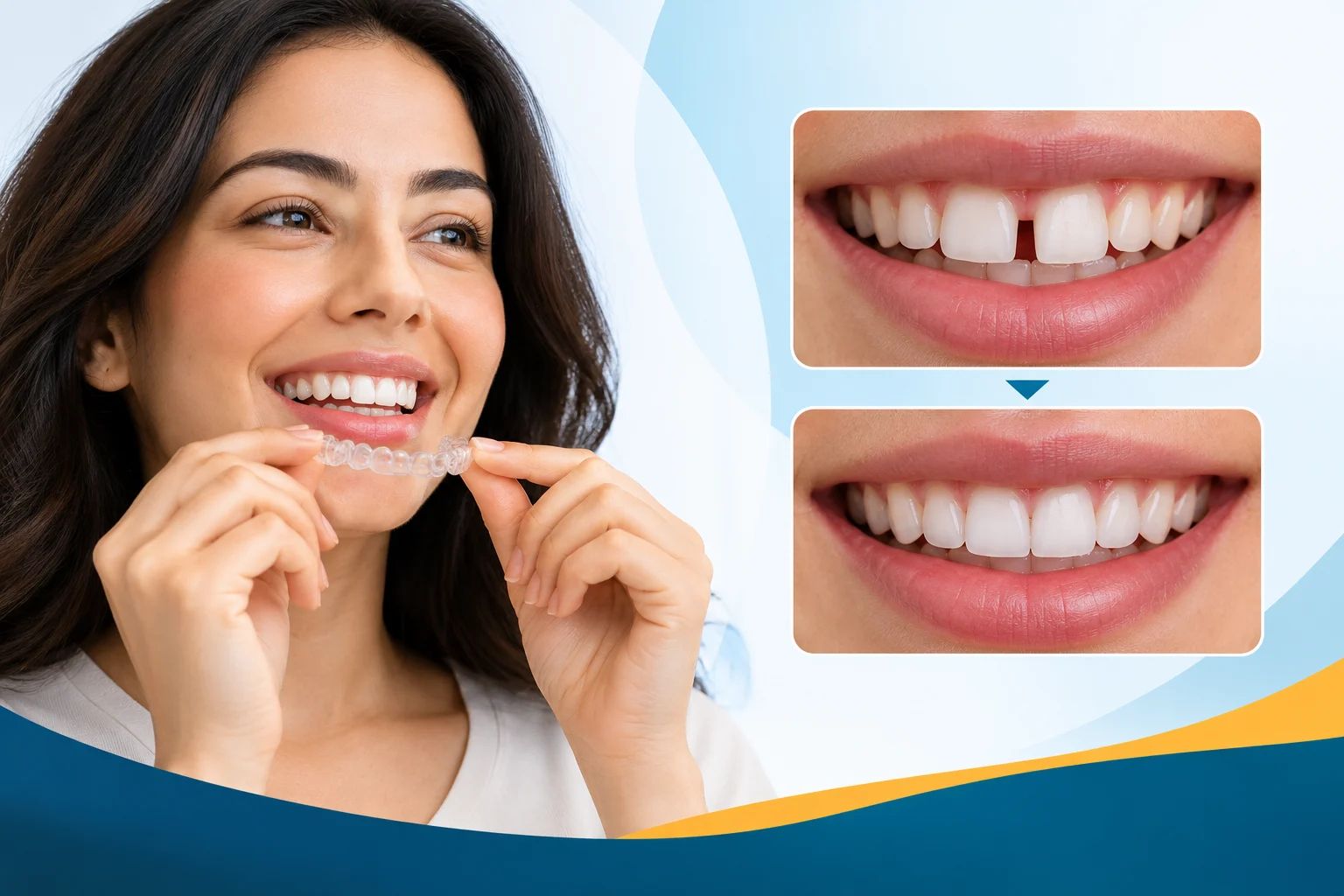
Can Invisalign Close Large Gaps Between Your Teeth?
A beautiful smile can make you feel more confident, but noticeable gaps between your teeth may sometimes affect your confidence, speech, or bite. If you have been looking for a discreet way to close these spaces without traditional metal braces, Invisalign may be an option worth exploring.
Invisalign uses a series of clear, removable aligners designed to gradually move teeth into their planned positions. It is a popular orthodontic treatment for people who want a less noticeable alternative to conventional braces. However, when it comes to large gaps, the results depend on several factors, including the size of the spaces, the position of your teeth, your bite, and the health of your gums.
At Gupta Dental Clinic, understanding your dental concerns is an important first step towards choosing the right treatment. If you are considering Invisalign in Gurgaon, knowing what clear aligners can and cannot achieve will help you make a more informed decision.
In this guide, we explain whether Invisalign can close large gaps, how the treatment works, how long it may take, and when other dental treatments may be necessary.
Quick Answer: Can Invisalign Close Large Gaps?
Yes, Invisalign can close many large gaps between teeth, but it is not suitable for every case. Clear aligners can gradually move teeth closer together when the gaps are caused by tooth positioning and the surrounding dental structures can support the movement.
However, very large spaces, missing teeth, gum disease, or underlying bite problems may require additional treatment or an alternative orthodontic approach.
An orthodontic assessment is the best way to determine whether Invisalign alone can achieve your desired results.
What Causes Large Gaps Between Teeth?
Before choosing a treatment, it is important to understand why the gaps have developed. Dentists refer to a gap between adjacent teeth as a diastema. Although gaps are often harmless, their underlying cause can influence which treatment is most effective.
Common causes include:
- Genetics and jaw size: Your teeth may be smaller in proportion to your jaw, leaving extra space between them.
- Missing teeth: When a tooth is absent, the resulting space may affect the position of neighbouring teeth.
- A thick or prominent labial frenum: The tissue connecting the inside of your upper lip to your gum may contribute to a gap between the upper front teeth.
- Tongue-thrusting habits: Repeated pressure from the tongue against the front teeth can gradually affect their position.
- Gum disease: Damage to the supporting tissues and bone can cause teeth to loosen, shift, and develop new gaps.
- Bite and alignment problems: Differences in how the upper and lower teeth fit together can contribute to spacing or other alignment concerns.
Identifying the cause helps your dentist determine whether Invisalign alone is appropriate or whether additional treatment is needed.
How Does Invisalign Close Large Gaps?
Invisalign uses a series of custom-made, transparent plastic aligners that apply controlled forces to move teeth gradually. Each aligner is designed to make small adjustments according to an individual treatment plan.
Here is how the process generally works.
1. Digital Scanning and Dental Assessment
Your dentist or orthodontist examines your teeth, gums, bite, and jaw alignment. Digital scans or impressions, along with X-rays when indicated, help assess the spacing and plan the required movements.
2. A Personalised Treatment Plan
The dental professional maps out the intended tooth movements and estimates how the gaps may close. Digital treatment planning can help you understand the proposed changes, although a simulation cannot guarantee the final outcome.
3. Wearing Custom Clear Aligners
You receive a series of aligners that gradually guide your teeth towards their planned positions. Most patients are advised to wear them for around 20 to 22 hours a day, removing them for meals, drinks other than water, and oral hygiene.
4. Monitoring Progress
Regular dental check-ups help your provider assess whether your teeth are moving as planned. Some patients may need small tooth-coloured attachments or additional aligners to improve control over tooth movement.
5. Retaining Your New Smile
After the gaps have closed, retainers help maintain the new tooth positions. Retention is particularly important when closing spaces because teeth can gradually drift apart again without appropriate follow-up care.
Is Invisalign Suitable for Very Large Gaps?
The suitability of Invisalign depends on more than the visible width of a gap. A large space between healthy teeth may respond well to orthodontic treatment, while a smaller gap caused by gum disease or an underlying bite problem may require more complex care.
Small to moderate gaps
Invisalign may be a suitable option when the teeth and gums are healthy and the spacing can be corrected with controlled tooth movement.
Large gaps between front teeth
Invisalign may still work, but the orthodontist must consider root positions, tooth proportions, the bite, and whether additional procedures are needed for a balanced result.
Gaps caused by missing teeth or gum problems
These cases need a careful evaluation. Missing teeth may require a replacement plan, while active gum disease should be treated before orthodontic movement is considered.
In some cases, Invisalign can be combined with dental bonding or veneers to improve the appearance of the teeth after orthodontic treatment. If the gap is caused by a missing tooth, a dental implant or another suitable replacement may be considered instead of simply moving the neighbouring teeth together.
How Long Does Invisalign Take to Close Large Gaps?
There is no single treatment duration for every patient. The time required depends on the amount and type of tooth movement, the number of gaps, your bite, your gum health, and how consistently you wear your aligners.
For some straightforward cases, treatment may take several months. More complex spacing problems may require a year or longer, and additional refinement aligners can extend the process.
Factors that affect treatment time include:
- Gap size and location: Wider spaces or multiple gaps may require more extensive tooth movement.
- Tooth and root positions: Moving teeth bodily, rather than simply tipping their crowns, requires careful planning.
- Bite alignment: Correcting spacing alongside an overbite, underbite, or other bite problem can add complexity.
- Wear time: Not wearing aligners for the prescribed number of hours may delay progress.
- Oral health: Gum inflammation or other dental concerns may need attention before or during treatment.
Your orthodontist can provide a more realistic estimate after examining your teeth and planning your case. Be cautious of anyone promising that every large gap can be closed within a fixed number of months.
What Are the Benefits of Invisalign for Closing Gaps?
For patients who are suitable candidates, Invisalign offers several practical advantages over traditional braces.
- Nearly invisible appearance: The transparent aligners are less noticeable during everyday activities, making them appealing to adults and working professionals.
- Removable design: You can remove the aligners when eating, drinking anything other than water, and brushing your teeth.
- Easier oral hygiene: Removing the trays allows you to brush and floss normally, although consistent cleaning remains essential.
- No metal brackets or wires: Clear aligners avoid many of the soft-tissue irritations associated with traditional braces.
- Personalised treatment planning: Digital scans and planned tooth movements help your dentist monitor progress and make adjustments when needed.
However, Invisalign requires discipline. Wearing the aligners for fewer hours than recommended can affect treatment progress, and clear aligners are not necessarily the best option for every complex orthodontic case.
Invisalign vs Traditional Braces for Large Gaps
Both Invisalign and traditional braces can close spaces between teeth. The right choice depends on your dental condition, treatment goals, and the type of tooth movement required.
| Feature | Invisalign | Traditional braces |
| Appearance | Transparent and discreet | Metal brackets and wires are visible |
| Removability | Removable for meals and cleaning | Fixed throughout treatment |
| Oral hygiene | Easier access to teeth when trays are removed | Requires additional cleaning around brackets |
| Complex tooth movements | Effective in many cases, but some movements are less predictable | May offer better control for certain complex movements |
| Patient responsibility | Requires consistent daily wear | Cannot be removed by the patient |
| Suitability for large gaps | Depends on the cause and complexity | May be recommended for certain difficult cases |
The best treatment is the one that achieves healthy tooth positioning, a functional bite, and a stable result. An orthodontic assessment can help determine whether clear aligners or fixed braces are more appropriate for your situation.
Can Invisalign Close Gaps Without Dental Surgery?
In many cases, yes. If the spaces are caused primarily by tooth positioning, Invisalign may close them without surgery.
However, additional procedures may occasionally be necessary.
- Frenectomy: If an unusually prominent tissue attachment between the upper front teeth contributes to the gap, a dentist may recommend a minor procedure in selected cases.
- Gum disease treatment: If the teeth have shifted because of periodontal disease, the underlying condition must be addressed before orthodontic treatment can safely proceed.
- Restorative treatment: Dental bonding or veneers may help improve tooth shape when the teeth are naturally small or the remaining spaces are not suitable for orthodontic closure alone.
- Tooth replacement: A missing tooth may require an implant, bridge, or another suitable replacement, depending on the individual case.
Not everyone with a gap needs these procedures. Your dentist will recommend additional treatment only when clinically appropriate.
Is Invisalign Painful When Closing Large Gaps?
Most patients experience some pressure or mild discomfort when they start wearing a new set of aligners. This sensation usually settles as the teeth adjust to the planned movement.
You may notice:
- Temporary tenderness when biting or chewing.
- A feeling of tightness when inserting a new aligner.
- Mild irritation during the initial adjustment period.
These sensations are generally manageable. However, severe or persistent pain, swelling, or a loose tooth should be assessed by your dentist rather than ignored.
Following your dentist’s instructions and wearing properly fitted aligners can help make the treatment experience more comfortable.
What Happens If Large Gaps Reopen After Invisalign?
Teeth naturally tend to shift over time, particularly after orthodontic treatment. This is why retention is an essential part of closing gaps.
Your dentist will usually recommend a retainer to help keep the teeth in their corrected positions. Depending on your case, this may be a removable retainer or a fixed retainer bonded behind selected teeth.
You should follow your dentist’s instructions regarding retainer wear and attend follow-up appointments when advised.
If a gap starts reopening, seek an assessment early. The cause may need to be identified before deciding whether a retainer adjustment or further orthodontic treatment is appropriate.
Who Is a Good Candidate for Invisalign in Gurgaon?
You may be a suitable candidate for Invisalign if:
- You have gaps between your teeth that you would like to close.
- Your teeth and gums are healthy enough for orthodontic treatment.
- Your bite and tooth positions can be corrected predictably with clear aligners.
- You are willing to wear your aligners consistently.
- You understand the importance of follow-up visits and long-term retention.
If your gaps are new, becoming wider, or accompanied by bleeding gums or loose teeth, arrange a dental examination before considering cosmetic treatment. These symptoms may indicate an underlying dental or periodontal problem.
Why Consider Gupta Dental Clinic for Invisalign Treatment?
Choosing a dental clinic involves more than selecting a treatment. You also need a professional who can evaluate the cause of your spacing, explain the available options, and plan treatment around your oral health.
At Gupta Dental Clinic, patients exploring Invisalign can learn about clear aligner treatment, the assessment process, and the factors that influence their results.
The clinic’s Invisalign service includes personalised treatment planning, digital assessment, and monitoring throughout the orthodontic process.
If you are considering Invisalign in Gurgaon, a consultation can help you understand:
- Whether Invisalign can close your particular gaps.
- Whether your bite needs correction alongside the spacing.
- How long your treatment may take.
- Whether additional dental procedures may be beneficial.
- How to maintain your results after treatment.
Visit the Gupta Dental Clinic website to learn more about its Invisalign service and arrange a consultation.
Frequently Asked Questions About Invisalign for Large Gaps
1. Can Invisalign close a 5 mm gap between teeth?
Invisalign may close a 5 mm gap in selected cases. However, the gap measurement alone does not determine suitability. Your dentist must evaluate the position of the teeth and roots, your bite, gum health, and the cause of the spacing.
2. Can Invisalign close gaps between all teeth?
Invisalign can address many types of dental spacing, including gaps between the front teeth and spaces elsewhere in the dental arch. The treatment plan depends on the number of gaps, their location, and the movements required.
3. Is Invisalign better than braces for closing large gaps?
Neither option is universally better. Invisalign offers a discreet, removable approach, while traditional braces may provide more control for certain complex movements. Your orthodontist can recommend the appropriate option after examining your teeth.
4. Can Invisalign close gaps permanently?
Invisalign can close gaps, but teeth may move again after treatment. Wearing retainers as prescribed helps maintain the result. Long-term stability also depends on addressing the original cause of the spacing.
5. Can gaps return after Invisalign treatment?
Yes. Gaps can reopen if retainers are not worn as recommended or if factors such as tongue pressure, gum disease, or other underlying problems remain unaddressed. Regular dental reviews can help identify changes early.
6. How much does Invisalign cost in Gurgaon for closing gaps?
The cost depends on the complexity of your case, the number of aligners required, treatment duration, and whether additional procedures are needed. Contact Gupta Dental Clinic for an assessment and a personalised cost estimate.
7. Is Invisalign suitable for adults with large gaps?
Yes, adults may be suitable candidates for Invisalign. Age alone does not rule out treatment, but healthy gums, adequate bone support, and a suitable orthodontic treatment plan are important.
Conclusion: Can Invisalign Give You a Gap-Free Smile?
Invisalign can close many large gaps between teeth, but successful treatment starts with identifying the cause of the spacing. Clear aligners may be suitable when the gaps result from tooth positioning, while more complex cases may need braces, restorative treatment, gum care, or a combination of approaches.
The key is to choose a treatment that improves not only the appearance of your smile but also your bite, oral health, and long-term dental stability.
If you are exploring Invisalign in Gurgaon, Gupta Dental Clinic can help you understand your treatment options and whether clear aligners are suitable for your needs. Schedule a dental consultation to take the first step towards a healthier, more confident smile.