

What Can You Do When Your At-Home Aligners Stop Fitting? A Real Case of Restarting Treatment in Gurugram.
PATIENT CASE STORY · CLEAR ALIGNER ORTHODONTICS · AT-HOME ALIGNER RESCUE
A 26-year-old woman had been using mail-order aligners from an online company, but her teeth were not moving as planned. Here is how our team rescued her treatment with custom in-house aligners, monthly check-ups and a lot of encouragement, and finished it in 15 months.
👤 By Dr Ankur Gupta, BDS, MDS – Orthodontics | 📅 Published | 🕑 8 min read
Quick answer
Yes, aligner treatment that is not working can usually be rescued, but it normally has to be restarted, not just continued. When aligners stop “tracking”, the teeth are no longer following the plan and the trays no longer fit. Carrying on with the same trays rarely fixes this. In this case, an orthodontist examined the patient in person, took fresh 3D scans and made a new set of aligners in-house (CONFISMILE Aligners, made from soft multilayer Zendura FLX sheet). The patient came in for a check every month. Her crowded, uneven front teeth were straightened in 15 months: about 9 months with the first set of aligners and about 6 months with a second “refinement” set.
Case at a Glance
| Patient | Female, 26 years |
|---|---|
| Chief complaint | Crooked, uneven teeth |
| History | Online at-home aligner treatment already under way; aligners not tracking |
| Main findings | Upper side incisors sitting behind the other front teeth, upper left canine sticking out, crowding in the upper and lower front teeth, aligners not fitting |
| Why braces were ruled out | Patient firmly refused fixed braces |
| Treatment | Restarted with CONFISMILE in-house aligners made from Zendura FLX multilayer sheet |
| Monitoring | Clinic check-ups every month |
| Refinement | New scans at 9 months, followed by refinement aligners |
| Total duration | 15 months |
| Retention | Thin bonded wire retainers behind the upper and lower front teeth |
| Treated at | Dr Gupta’s Dental Implant & Orthodontic Centre, Sector 31, Gurugram |
The Patient’s Story
A 26-year-old woman came to our clinic with her mother. Her complaint was simple: her teeth were irregular, and the treatment she was already having was not fixing them.
A few months earlier she had started treatment with an online, direct-to-consumer aligner company. The company posts clear aligners to the patient’s home, and there is little or no in-person check-up. At first it seemed convenient. Over time, though, she and her mother noticed that her teeth were not changing the way the plan had promised.
Her mother was especially worried. Fifteen years earlier, she herself had finished braces treatment at our centre, and she had been happy with the result. Her reasoning was sensible: braces are fixed to the teeth and cannot be taken out, so they work whether or not the patient remembers to wear anything. Aligners only work if they are worn for about 20-22 hours a day, every day. She was frank with us that her daughter had not been wearing her aligners consistently.
So the family came to us with two concerns. The teeth were not moving, and the mother no longer trusted aligners to do the job.
What We Found at the First Visit
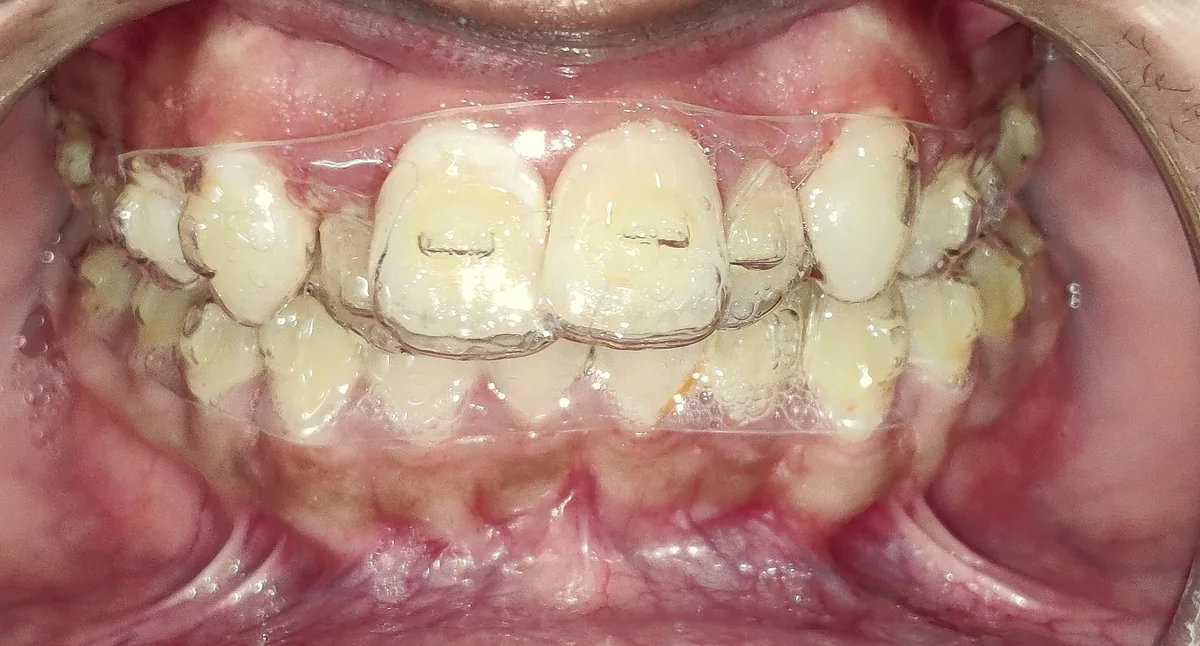
The existing aligners were not fitting
When we checked the aligners she was wearing, we could see a clear gap between the aligner and the teeth, especially around the front teeth. In orthodontics this is called “non-tracking” or “lack of tracking”.
An aligner is made in the exact shape the teeth are supposed to reach at that stage of treatment. It should snap snugly over every tooth. A visible gap means the teeth have fallen behind the plan. From then on, every new tray in the box is designed for teeth that are no longer where they “should” be. Each new tray fits worse than the last, and the teeth can even drift in the wrong direction.
The aligner material was hard and single-layered
The trays felt hard and rigid, and appeared to be made from a single-layer (monolayer) plastic sheet. Rigid sheets can put strong, sudden pressure on the teeth. This makes the first days with each new tray uncomfortable. When aligners are uncomfortable, patients are more likely to take them out, and that is exactly how poor wear begins.
The teeth themselves
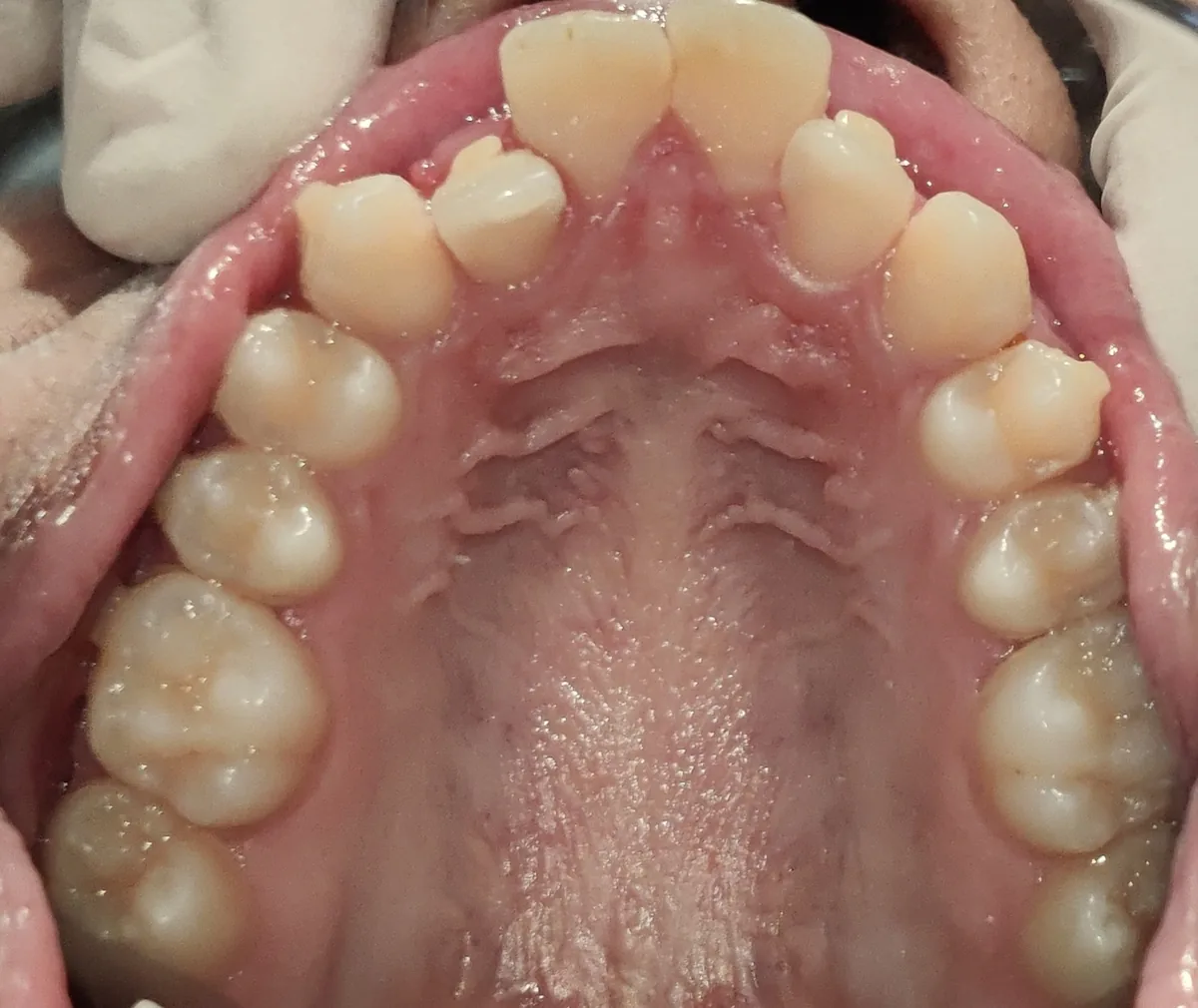
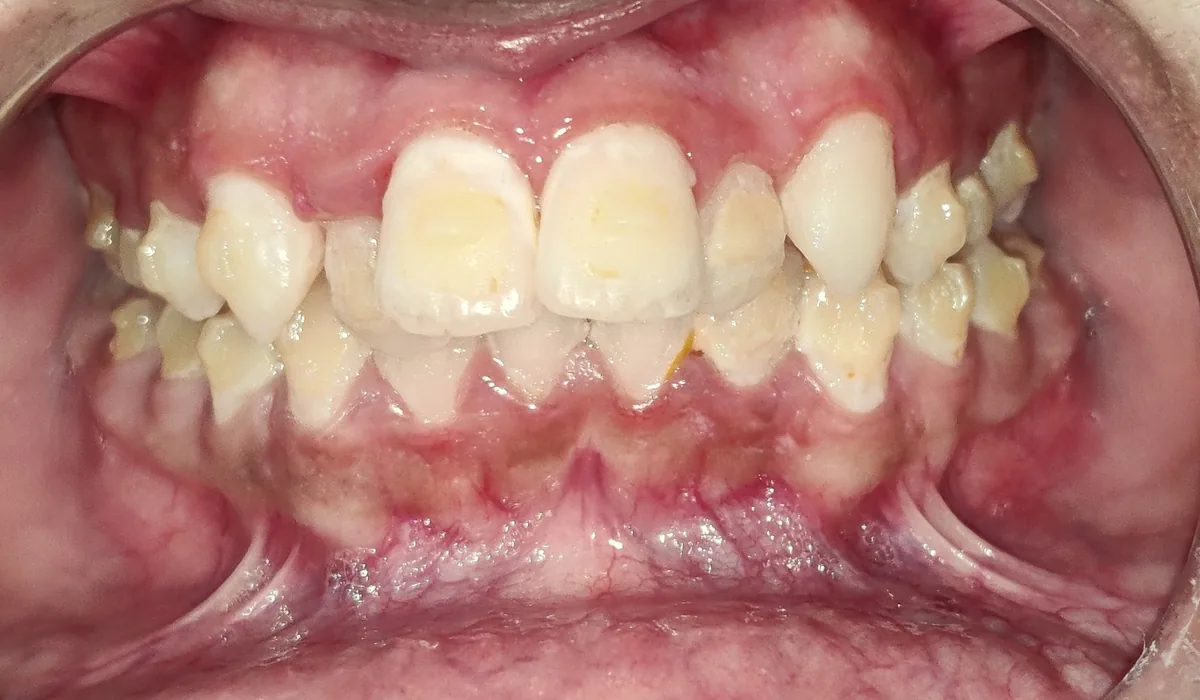
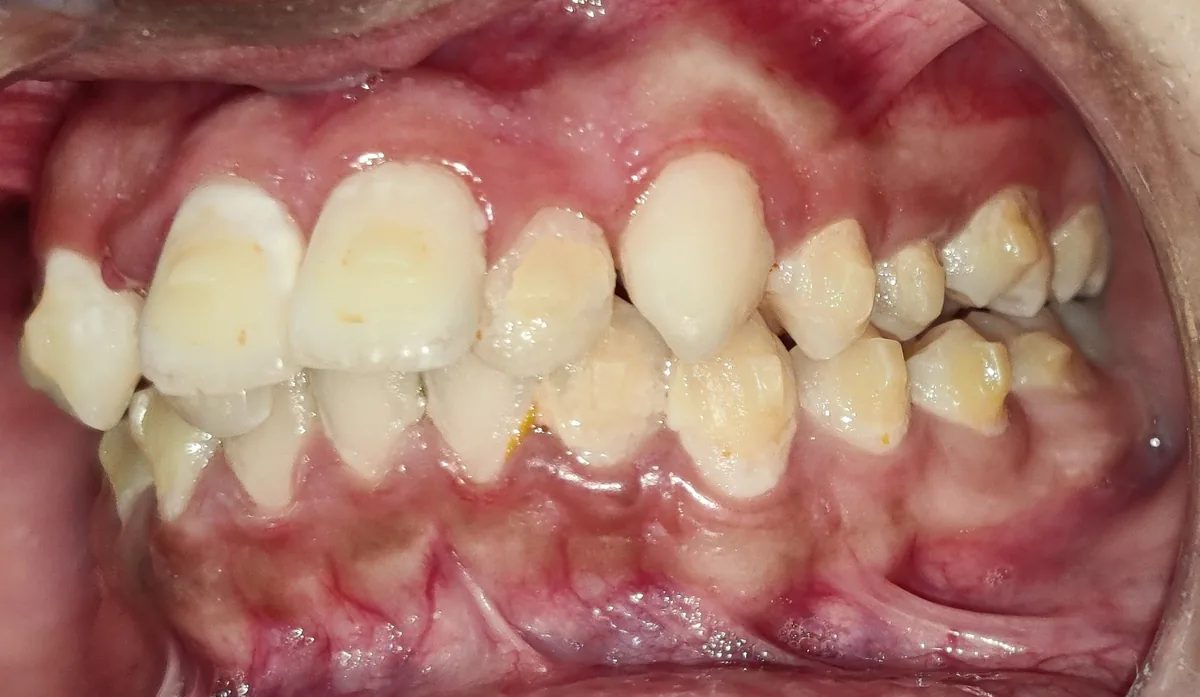
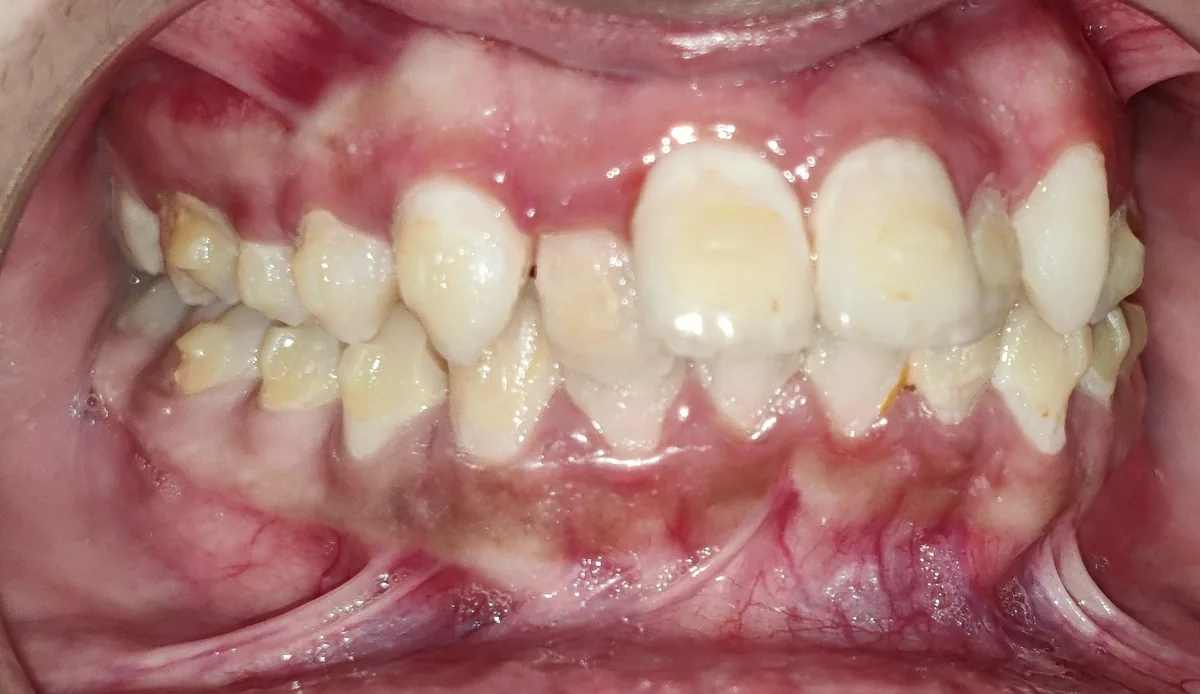
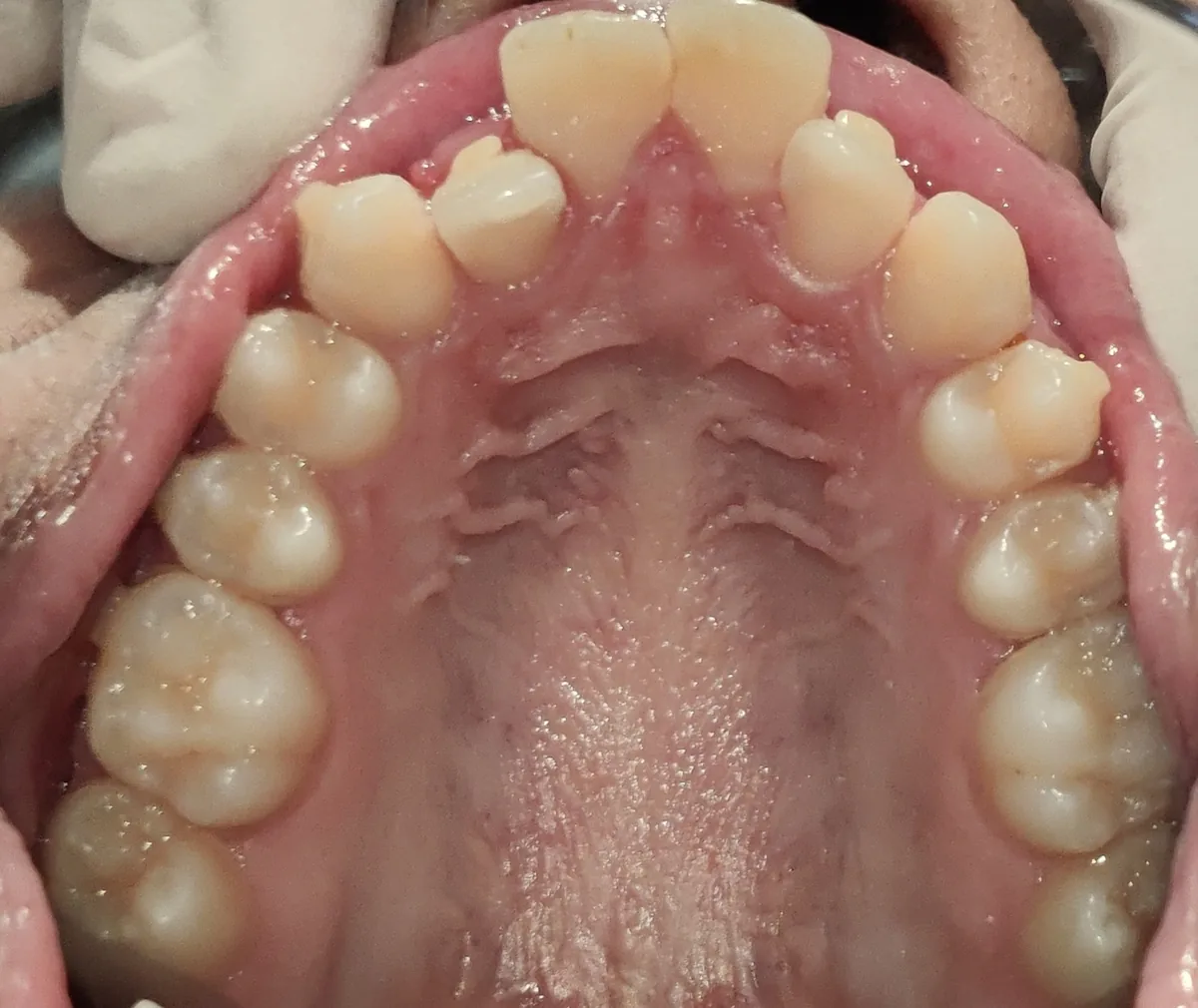
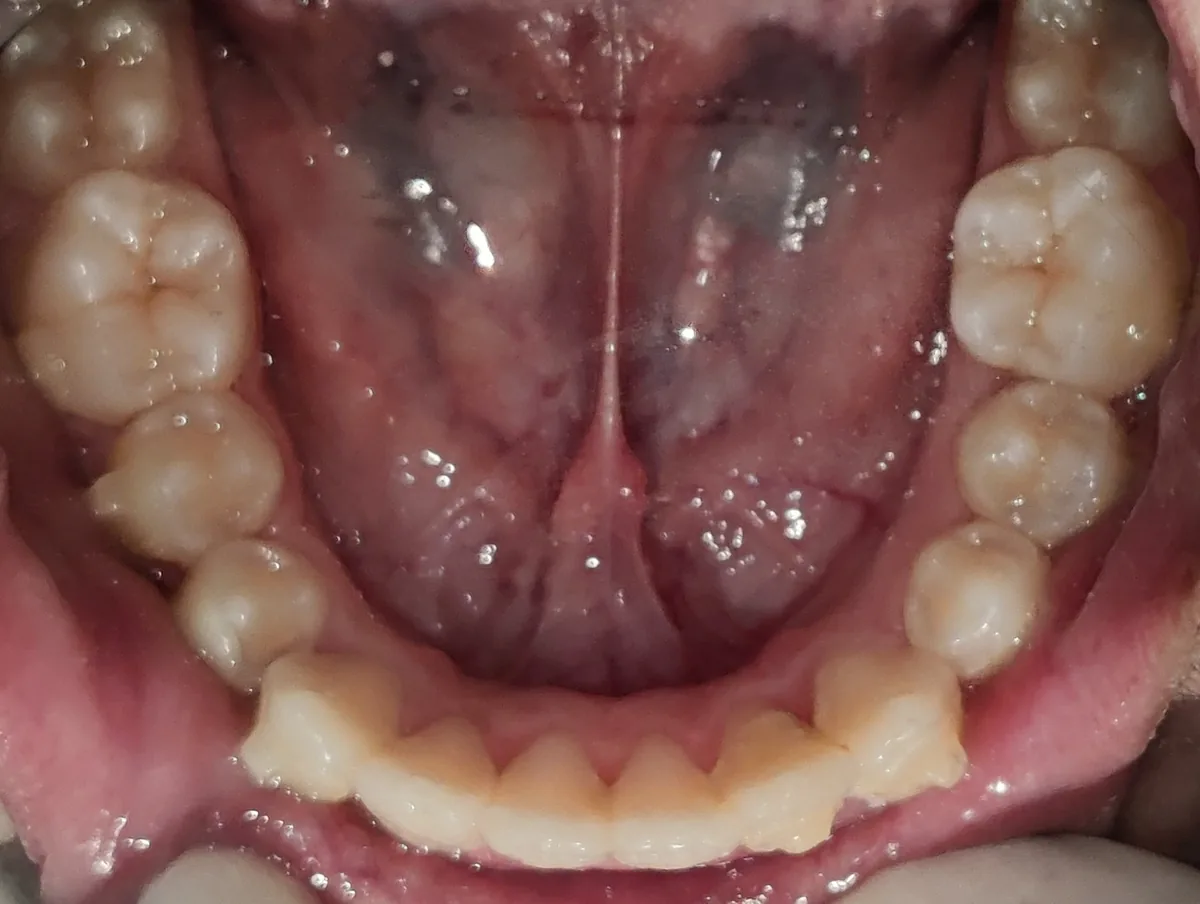
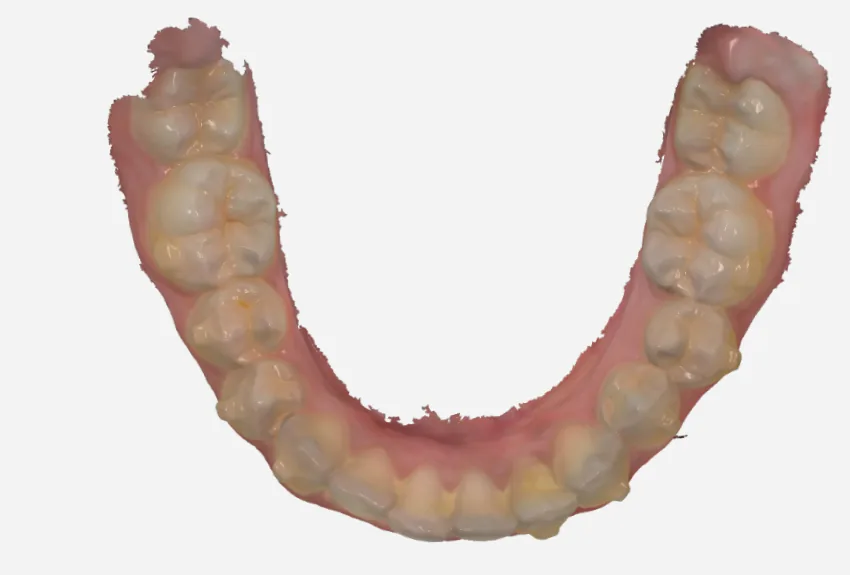
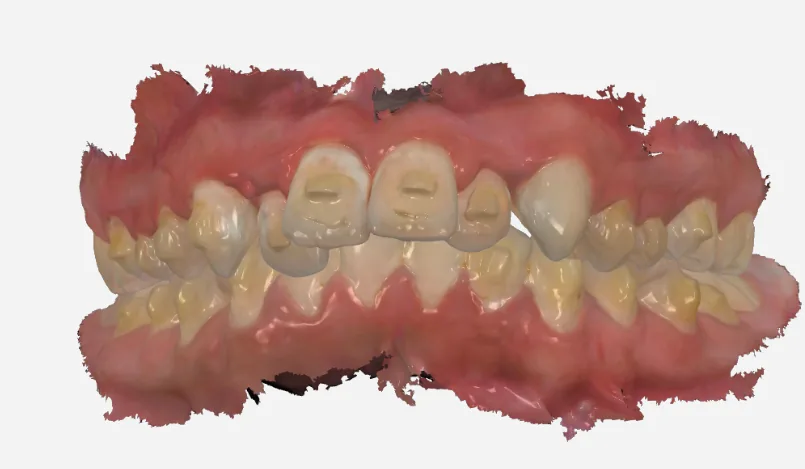
The clinical photographs showed:
- Upper side incisors (lateral incisors) sitting behind the two central front teeth, set back towards the roof of the mouth
- An upper left canine sticking out of the arch line
- Crowding and rotations in the upper front teeth
- Crowding of the lower front teeth, with the incisors overlapping one another
- A generally uneven smile line from the front and side views
The Treatment Options We Discussed
We explained both realistic paths honestly to the patient and her mother.
Option A: Fixed braces. Braces do not depend on the patient remembering to wear them, so they would have removed the compliance problem completely. Her mother preferred this, based on her own good experience.
Option B: Restart with clinic-supervised clear aligners. This would address the two technical reasons the first treatment failed, the poor fit and the rigid material. It would also add the one thing at-home treatment was missing: regular in-person check-ups.
The patient was adamant that she would not wear braces. We respect that choice, because a treatment the patient refuses to accept is a treatment that fails. That left Option B. Our job was to make aligners work this time, for a patient who had already shown they were hard for her to stick with.
Our Treatment Plan: Fixing Why It Failed the First Time
Rather than simply “doing aligners again”, we built the plan around the specific reasons the first attempt had not worked.
1. Start from the teeth she has now, not the old plan
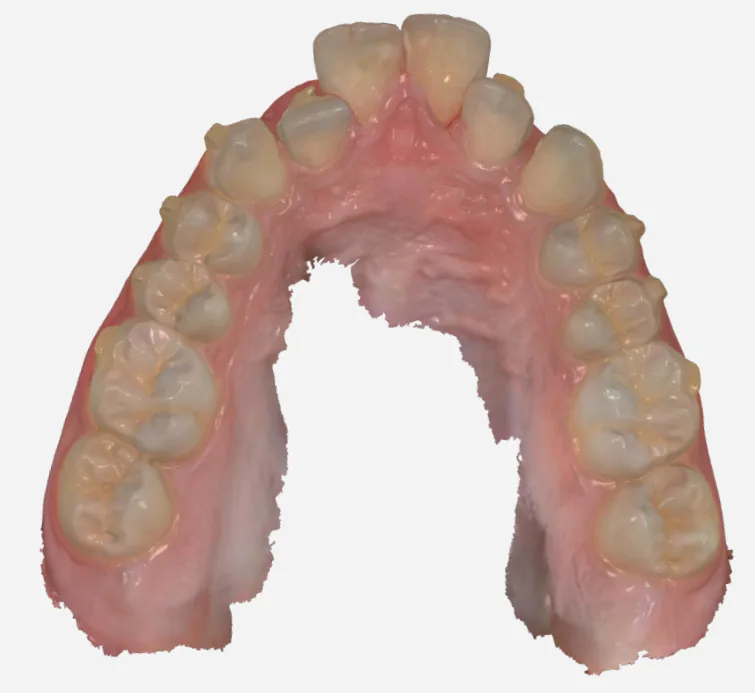
We did not try to continue the online plan. We took fresh digital scans and made a new treatment plan from the actual position of her teeth. This is the only reliable way to bring a non-tracking case back on course.
2. Switch to softer, multilayer aligner material
We made her aligners in our own clinic lab as CONFISMILE Aligners, using Zendura FLX, a multilayer thermoforming sheet. A multilayer sheet has an elastic inner layer between harder outer layers. This lets it apply a gentler, more continuous force than a rigid single-layer sheet. For this patient, the main benefit was comfort. Aligners that do not hurt are aligners that get worn.
3. Build in regular supervision and motivation
We asked her to come in every month. At each visit we checked that the aligners were fitting snugly, looked at how the teeth were moving, and caught any problem early, before it could snowball the way it had with the online treatment.
These visits were also about motivation. We reviewed her progress with her, praised her effort, and reminded her how many hours a day the aligners needed to be worn. For a patient who had struggled to wear them consistently, this regular human contact made the difference.
4. Plan a refinement stage from the start
Most aligner cases need a second, shorter set of aligners to fine-tune the result, and we planned for this from day one. After about 9 months, we took new scans and made refinement aligners to perfect the final positions. Once she started the refinement set, we saw her again when she reached her last aligner to confirm the result.
Treatment Timeline
| Phase | Timing | What happened |
|---|---|---|
| Consultation and records | Month 0 | Checked the old aligners and teeth, discussed options, took digital scans |
| First aligner set | Months 0–9 | CONFISMILE Zendura FLX aligners fitted; clinic check every month |
| Mid-treatment re-scan | Month 9 | Fresh scans taken to plan the refinement stage |
| Refinement aligners | Months 9–15 | Fine-tuning of tooth positions |
| Final check and retention | Month 15 | Result reviewed at last aligner; retainers placed |
Total active treatment: 15 months.
The Result
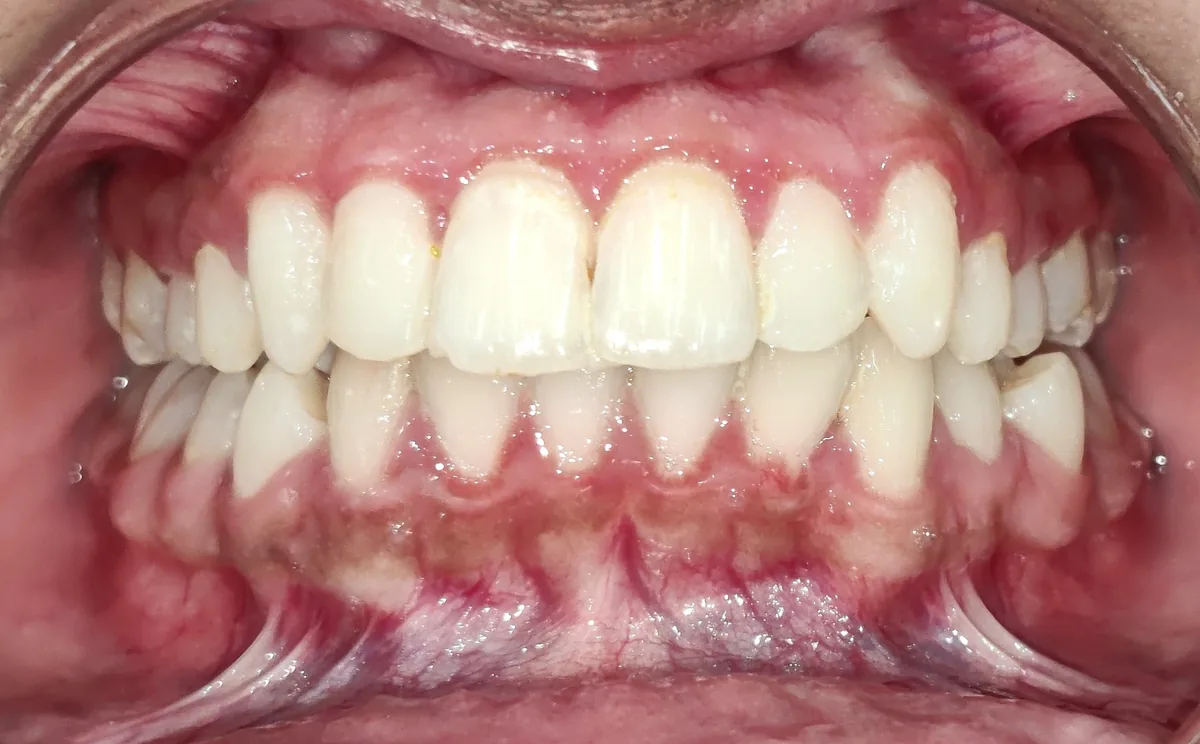
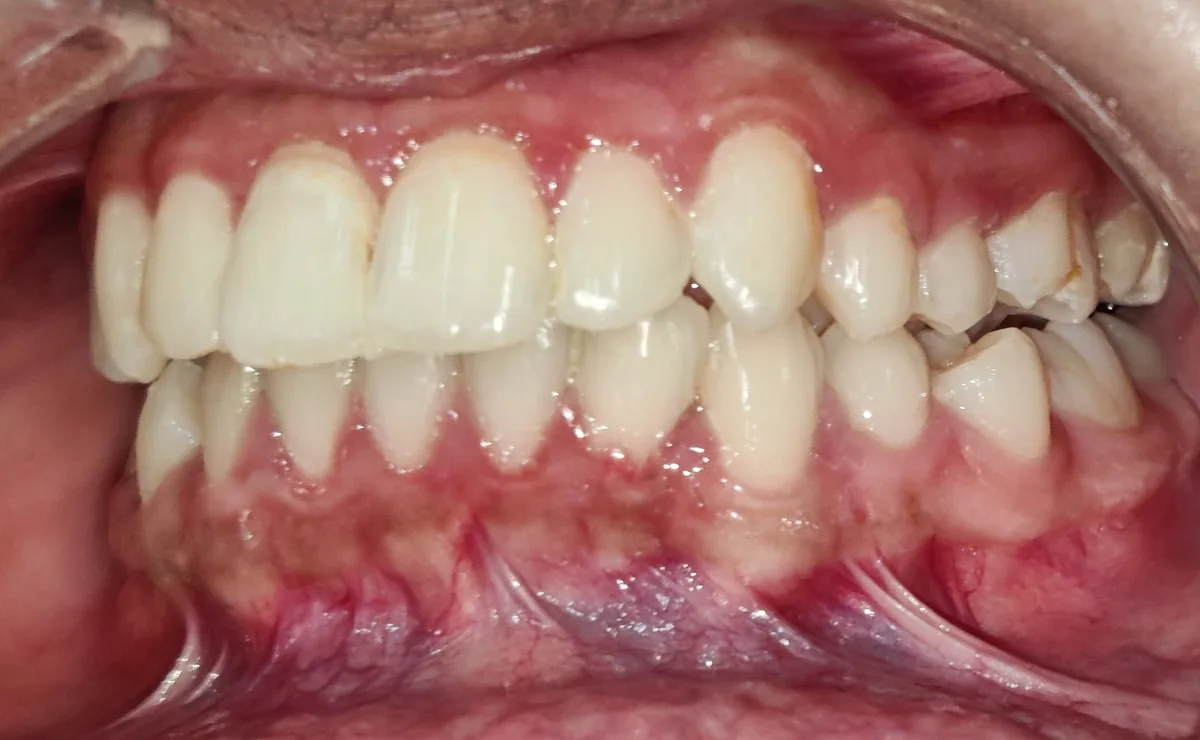
At the end of treatment:
- The upper side incisors were brought forward into line with the central incisors
- The upper left canine was moved back into the arch
- The upper and lower front teeth were straightened and the crowding resolved
- The upper and lower arches have smooth, even curves, and the smile line looks balanced from the front and sides
- Fixed bonded retainers (thin wires stuck behind the upper and lower front teeth) were placed to protect the result
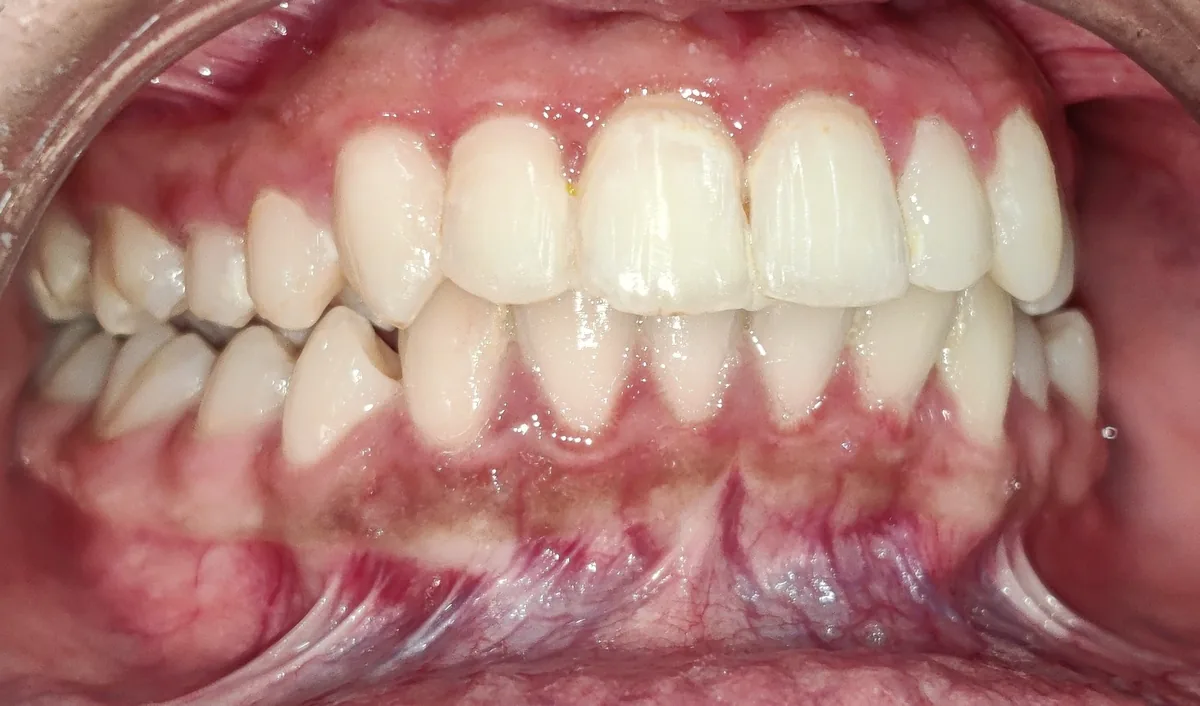
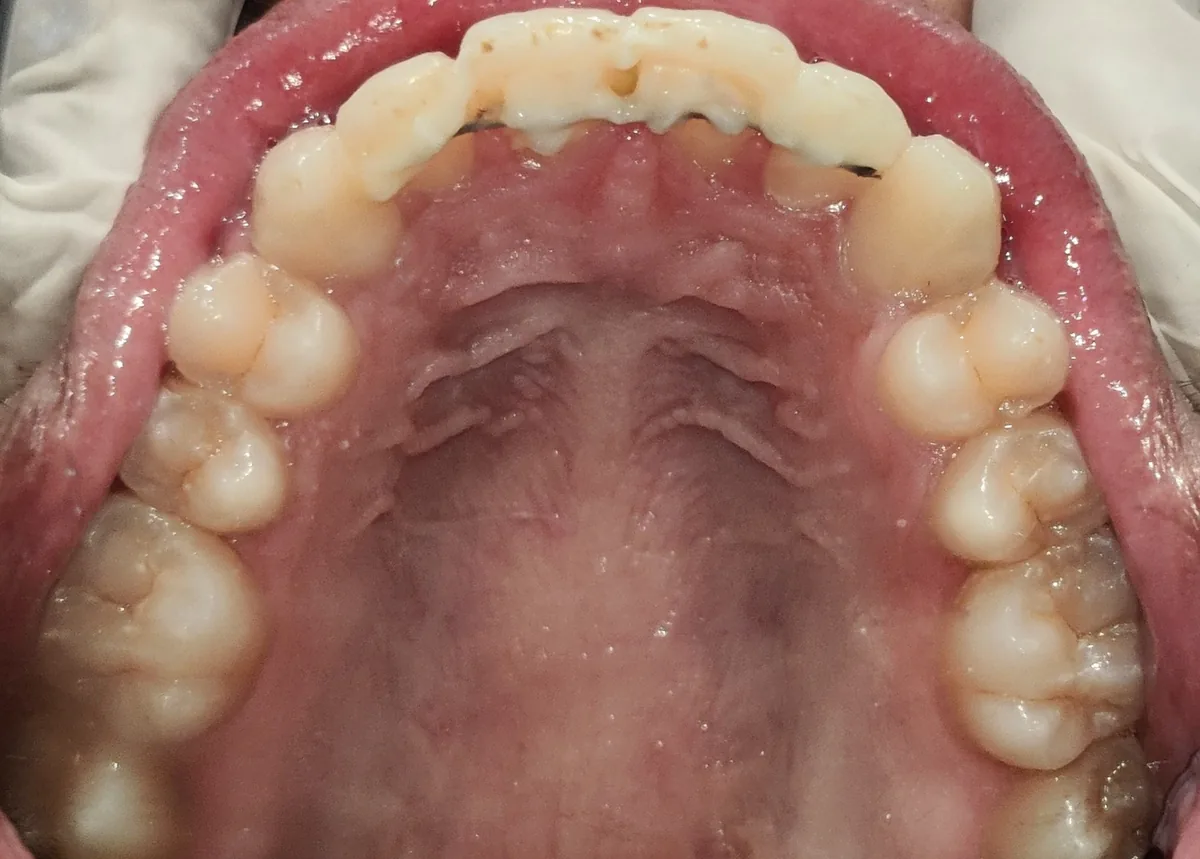
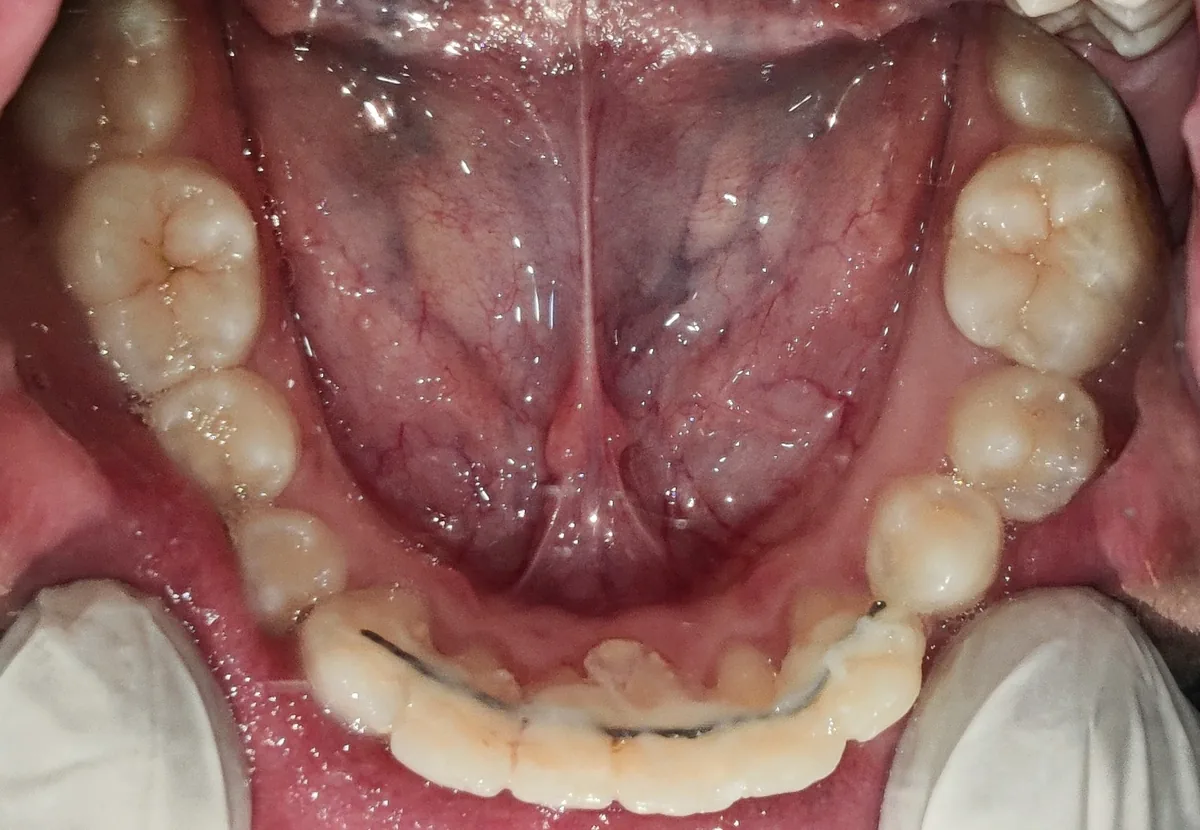
Perhaps most importantly, a patient who had given up on aligners, and whose mother had lost faith in them, finished her treatment with clear aligners, without ever wearing braces.
Dr Ankur Gupta’s Clinical Insight
“When patients come to us with aligners that are not tracking, the problem is almost never the idea of aligners itself. It is usually a combination of three things: a plan nobody is checking, a material that is uncomfortable to wear, and no one keeping the patient on track. Aligners are a medical device that moves teeth and bone. They work best when an orthodontist examines the teeth regularly, notices small fit problems early and adjusts the plan. In this case, switching to a softer multilayer material and seeing her every month turned an uncooperative aligner patient into a successful one.”
Dr Ankur Gupta, BDS, MDS – Orthodontics
Why Do At-Home Aligners Stop Tracking?
Based on this case and others we see in our practice, the most common reasons are:
- Not wearing them enough. Aligners need about 20–22 hours of wear a day. Missing even a few hours regularly lets the teeth fall behind.
- No in-person check-ups. Without an orthodontist looking at the teeth, small fit problems go unnoticed until they become large ones.
- Uncomfortable material. Rigid trays can be painful, which tempts patients to leave them out.
- Planning without a full examination. Details such as gum health, bite relationships and teeth that need extra help to move are best judged in person.
- Carrying on with trays that no longer fit. Moving to the next tray when the current one does not fit makes the gap worse with every step.
Is Rescuing Failed Aligner Treatment Right for You?
This approach suits you if:
- You started aligners elsewhere (online or at another clinic) and the trays no longer fit snugly
- You still want clear aligners rather than braces
- You are willing to wear the aligners properly and come in for regular check-ups
- Your teeth and gums are healthy enough for tooth movement
Some cases may still be better treated with braces, or with a combination of aligners and other methods. The only way to know is a proper examination with photographs and scans. You can read more about all our orthodontic treatments in Gurugram, including braces and clear aligners.
You may also like our related case study: how clear aligners corrected a relapsed bite for a patient living in Dubai.
Frequently Asked Questions
What does “aligners not tracking” mean?
It means your teeth are not moving as fast as the treatment plan expects, so the aligner no longer fits your teeth snugly. You may see a gap between the aligner and the tips of your teeth, or find the tray hard to push into place.
Can I just keep wearing the next aligner if my current one does not fit?
It is not a good idea. Each aligner is designed for a specific tooth position. If your teeth are behind schedule, each new tray fits worse. See an orthodontist, who may take new scans and make a revised plan.
Can a different orthodontist take over my online aligner treatment?
Yes. An orthodontist can examine your teeth and take fresh scans. They can then either continue from where you are or, more often, restart with a new plan and new aligners, as in this case.
What is the difference between monolayer and multilayer aligner material?
A monolayer aligner is made from one layer of plastic and tends to be stiffer. A multilayer material such as Zendura FLX combines different layers, including an elastic inner layer. This gives gentler, more continuous pressure and is usually more comfortable to wear.
How long does it take to fix failed aligner treatment?
It depends on how complex the case is. This patient’s restarted treatment took 15 months in total, including a refinement stage.
Are braces more reliable than aligners?
Braces do not depend on the patient wearing them, which makes them predictable when a patient struggles to keep aligners in. However, aligners can give equally good results in suitable cases when they are worn properly and supervised by an orthodontist.
Why do I need a retainer after aligners?
Teeth naturally try to move back towards their old positions, especially in the first months after treatment. Retainers hold the new positions. In this case, thin bonded retainers were placed behind the upper and lower front teeth.
Where can I get failed aligner treatment checked in Gurugram?
You can book an assessment at Dr Gupta’s Dental Implant & Orthodontic Centre, Sector 31, Gurugram, Haryana 122001, with Dr Ankur Gupta (BDS, MDS – Orthodontics).
Key Takeaways
- Aligners that do not fit are a warning sign, not something to push through.
- Rescuing a failed aligner case usually means new scans and a new plan.
- Comfortable multilayer material and regular in-person monitoring can turn a struggling aligner patient into a successful one.
- Even patients with a history of poor aligner wear can finish with clear aligners when they have the right support.
Are your aligners not fitting?
Bring your current aligners to Dr Gupta’s Dental Implant & Orthodontic Centre, Sector 31, Gurugram. Dr Ankur Gupta will check the fit, examine your teeth and explain whether your treatment can be continued or needs a fresh start.
This case study describes one patient’s treatment and is shared with consent for educational purposes. Individual results vary. A personal assessment by a qualified orthodontist is needed to decide the right treatment for you.