

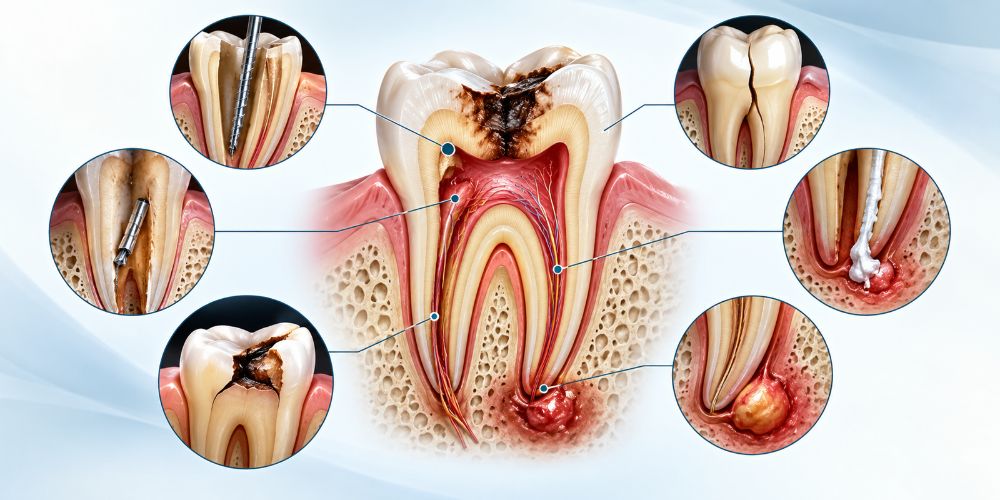
Common Reasons for Root Canal Treatment Failure
Root canal treatment is a commonly performed dental procedure that helps preserve a natural tooth affected by infection or inflammation of the dental pulp. When the treatment is completed appropriately and the tooth is restored and maintained properly, it can remain functional for many years. However, in some cases, a previously treated tooth may not heal as expected or may develop a new infection over time.
Root canal treatment failure can occur for several reasons, including complex root canal anatomy, persistent bacteria, delayed placement of a permanent restoration, recurrent tooth decay, and cracks in the tooth. Recognising these factors early can help patients seek appropriate dental care and explore suitable treatment options.
If you have persistent tooth pain, swelling, discomfort while chewing, or recurring symptoms in a tooth that has already undergone a root canal, a dental evaluation is important.
At Dr Gupta’s Dental Implant & Orthodontic Centre, patients seeking Root Canal Treatment In Gurgaon can learn about the causes of root canal complications, the importance of timely diagnosis, and the available options for managing a previously treated tooth.
What Is Root Canal Treatment Failure?
Root canal treatment failure occurs when a treated tooth does not heal as expected or develops persistent or recurrent disease after the procedure.
During root canal treatment, the dentist removes infected or inflamed pulp tissue, cleans and shapes the root canal system, and seals the canals with a suitable filling material. The tooth is then restored to protect it from further bacterial contamination and structural damage.
Despite these steps, microorganisms may sometimes remain within complex canal spaces or re-enter the tooth through a defective filling, crown, or new cavity. In other situations, a fracture or another dental problem may affect the outcome.
Importantly, pain immediately after root canal treatment does not automatically mean that the procedure has failed. Mild tenderness can occur during recovery. Persistent, worsening, or recurring symptoms, however, should be assessed by a dentist.
Root canal treatment failure does not always mean that the tooth must be extracted. Depending on the cause, nonsurgical retreatment, endodontic surgery, or another restorative approach may help preserve the tooth.
10 Common Reasons for Root Canal Treatment Failure
Understanding the causes of root canal treatment failure can help patients recognise why follow-up care, a durable restoration, and regular dental examinations matter.
1. Missed or Untreated Root Canals
One of the possible reasons for root canal failure is an untreated canal within the tooth.
Some teeth have complex internal anatomy, with additional canals, narrow passages, or unexpected curves. These features can make it difficult to identify and treat every part of the root canal system.
If a canal remains untreated, infected tissue and bacteria may persist inside the tooth. This can lead to continued inflammation, discomfort, or infection around the root tip.
Possible warning signs include:
- Persistent or recurring pain in the treated tooth.
- Tenderness when biting or chewing.
- Swelling or a recurring gum boil near the affected tooth.
How it may be managed: The dentist may recommend clinical examination and appropriate dental imaging to investigate the tooth. Depending on the findings, root canal retreatment or endodontic surgery may be considered.
2. Persistent Bacterial Infection
Root canal treatment aims to remove infected tissue and reduce the bacterial load inside the tooth. However, the root canal system contains small branches, irregular spaces, and microscopic areas that can be difficult to clean completely.
Bacteria may survive in inaccessible areas and continue to stimulate inflammation around the root. A persistent infection can prevent the surrounding tissues from healing as expected.
This does not necessarily mean that the original procedure was performed incorrectly. The complexity of the root canal system and the nature of the infection can also influence healing.
How it may be managed: The dentist will assess the source of the infection and determine whether further canal cleaning, retreatment, endodontic surgery, or another approach is appropriate.
Antibiotics alone generally do not eliminate the source of infection inside a tooth and should only be used when clinically indicated.
3. Inadequate Cleaning and Shaping of the Root Canals
Cleaning and shaping are essential stages of root canal treatment. They help remove infected tissue, reduce microorganisms, and prepare the canals for sealing.
If parts of the canal system are inadequately cleaned, residual tissue and bacteria may remain. Similarly, procedural difficulties involving narrow, curved, or calcified canals can affect the quality of treatment.
A canal that cannot be adequately cleaned and sealed may have a higher risk of persistent disease.
How it may be managed: The dentist evaluates the quality of the previous treatment, the condition of the tooth, and the extent of any infection. Retreatment may be recommended when the existing canal filling can be safely removed and the canals can be treated again.
4. Poor Sealing of the Root Canal System
After cleaning, the root canals must be filled and sealed appropriately to reduce the possibility of bacterial re-entry and prevent microorganisms from persisting in untreated spaces.
If the root filling is inadequate, contains significant voids, or does not extend appropriately through the prepared canal, the treatment may be less likely to heal successfully.
However, an X-ray finding alone does not always establish that a root canal has failed. The dentist must consider the patient’s symptoms, clinical examination, previous imaging, and changes over time.
How it may be managed: Depending on the cause and the tooth’s overall condition, the dentist may recommend monitoring, nonsurgical retreatment, or endodontic surgery.
5. Delayed Placement of a Permanent Filling or Crown
Completing the root canal procedure is only one part of preserving the tooth. The treated tooth also needs an appropriate permanent restoration.
A temporary filling is intended to protect the tooth for a limited period. If the permanent restoration is delayed, the temporary material may wear down, loosen, or allow bacteria to enter the tooth.
Additionally, a tooth that has lost substantial structure because of decay or previous dental treatment may be vulnerable to fracture during normal chewing.
How to reduce the risk:
- Follow the dentist’s instructions about completing the restoration.
- Avoid placing excessive pressure on the tooth while a temporary filling is present.
- Attend the recommended appointment for a permanent filling or crown.
- Report a loose, damaged, or missing restoration promptly.
A crown is not necessary for every root canal-treated tooth. The decision depends on the tooth’s location, remaining structure, chewing forces, and overall restorative needs.
6. Leakage Around a Filling or Dental Crown
Even after a successful root canal procedure, a damaged or poorly sealed restoration can allow saliva and bacteria to reach the inside of the tooth.
A loose crown, fractured filling, open margin, or defective restoration may compromise the seal and increase the risk of reinfection.
This is particularly important because a tooth may initially heal well and develop a new problem months or years later.
How it may be managed: The dentist examines the restoration and the underlying tooth. Depending on the findings, replacing the restoration, treating new decay, or performing root canal retreatment may be necessary.
7. New Tooth Decay After Root Canal Treatment
A tooth that has undergone root canal treatment can still develop cavities. The procedure removes the infected pulp tissue, but it does not make the remaining tooth structure resistant to decay.
New decay around a filling or crown can weaken the tooth and create a pathway for bacteria to enter the root canal system.
Risk factors include inadequate plaque control, frequent exposure to sugary foods and drinks, and difficulty cleaning around damaged or poorly fitting restorations.
Prevention tips:
- Brush twice daily with fluoride toothpaste.
- Clean between the teeth regularly.
- Limit frequent sugary snacks and drinks.
- Attend routine dental check-ups.
- Seek assessment if a filling or crown becomes loose or damaged.
Early treatment of new decay may help protect the tooth and reduce the likelihood of further complications.
8. Cracks or Fractures in the Tooth
A crack can compromise the long-term prognosis of a root canal-treated tooth. Teeth with extensive decay, large fillings, or substantial loss of structure may be more vulnerable to fracture.
A fracture can extend into the root and create spaces where bacteria accumulate. Vertical root fractures can be particularly challenging because they may compromise the tooth’s ability to remain healthy.
Possible symptoms include:
- Pain when biting or releasing pressure.
- Localised gum swelling.
- A recurring gum abscess near the affected tooth.
- Discomfort that comes and goes.
Some cracks produce few symptoms, so examination is important when a fracture is suspected.
How it may be managed: The dentist assesses the location and extent of the fracture. Depending on the findings, options may include a protective restoration, specialist treatment, or extraction if the tooth cannot be predictably preserved.
Not every cracked tooth requires extraction. The treatment decision depends on the type, depth, and extent of the crack.
9. Complications During the Procedure
Root canal treatment can involve technical challenges, particularly when the canals are narrow, curved, calcified, or difficult to access.
Occasionally, complications such as instrument separation, canal blockage, or perforation of the tooth structure may occur. These complications can make it more difficult to clean and seal the canal adequately.
Their significance depends on the specific circumstances. A separated instrument, for example, does not automatically mean that the treatment has failed.
How it may be managed: The dentist evaluates the complication and determines whether it can be managed through nonsurgical retreatment, specialist endodontic treatment, surgery, or another approach.
In complex cases, referral to a dentist with advanced endodontic expertise may be appropriate.
10. Failure to Attend Follow-Up Appointments
Follow-up appointments help the dentist assess symptoms, check the restoration, and monitor healing when indicated.
Some infections around the root tip can take time to resolve, and radiographic healing may lag behind clinical improvement. Without appropriate follow-up, persistent disease or a developing restoration problem may go unnoticed.
Skipping a recommended permanent restoration appointment can also expose the tooth to avoidable risks.
How to reduce the risk:
- Complete the recommended treatment plan.
- Attend follow-up visits when advised.
- Inform your dentist about persistent or recurring symptoms.
- Continue routine dental examinations even when the tooth feels normal.
Good follow-up care supports early identification of problems, although it cannot guarantee that every root canal-treated tooth will remain healthy indefinitely.
Signs and Symptoms of a Failed Root Canal
A previously treated tooth may develop symptoms when inflammation persists, infection returns, or the tooth becomes damaged. Some teeth, however, may show radiographic changes without causing noticeable pain.
Common warning signs include:
- Persistent or recurring pain: Discomfort that continues beyond the expected recovery period or returns after a symptom-free interval.
- Pain while chewing: Tenderness when biting or applying pressure to the treated tooth.
- Swelling around the tooth: Swelling of the gums or nearby tissues that may indicate infection.
- A gum boil or draining sinus: A small bump on the gum that may release fluid or pus.
- A cracked or loose restoration: A damaged filling or crown that may compromise the tooth’s seal.
- Tooth discolouration: A change in colour that requires assessment but does not, by itself, confirm root canal failure.
- Persistent radiographic changes: An area of inflammation around the root tip that fails to heal or increases over time.
When should you seek urgent dental care?
Contact a dentist promptly if you experience increasing pain, swelling, pus discharge, or recurring symptoms in a previously treated tooth.
Facial or neck swelling accompanied by difficulty breathing or swallowing requires emergency medical care. Fever, rapidly spreading swelling, or difficulty opening the mouth also warrants urgent assessment.
Do not wait for severe pain to develop before seeking help.
How Is Root Canal Treatment Failure Diagnosed?
A dentist cannot reliably diagnose root canal failure from pain alone. A structured assessment helps identify the cause and determine whether the tooth can be preserved.
1. Dental History and Symptom Assessment
The dentist asks about the original treatment, the duration of symptoms, the location of pain, and any previous swelling or dental procedures.
Information about when the symptoms began and whether they are improving or worsening can help guide the investigation.
2. Clinical Examination
The dentist examines the tooth, surrounding gums, filling or crown, and nearby teeth. Depending on the presentation, percussion tests, bite tests, periodontal probing, and other clinical assessments may be used.
These tests help distinguish between persistent infection, a crack, gum disease, and other possible causes of pain.
3. Dental X-Rays
Dental radiographs can help assess the quality of the root filling, the shape of the roots, and changes in the bone around the root tip.
Comparison with earlier images may help establish whether an area is healing, remaining unchanged, or becoming larger.
4. Additional Imaging When Indicated
In selected complex cases, cone-beam computed tomography (CBCT) may help investigate suspected missed canals, root fractures, or persistent disease that cannot be adequately assessed with conventional imaging.
CBCT is not required for every patient. Its use should be based on clinical need and whether the additional information is likely to influence treatment decisions.
5. A Diagnosis and Individualised Treatment Plan
Once the cause is identified, the dentist explains the findings and discusses appropriate options, including their potential benefits, limitations, risks, and alternatives.
The objective is to select treatment based on the tooth’s condition and the patient’s needs rather than assuming that every previously treated tooth requires retreatment or extraction.
What Are the Treatment Options for a Failed Root Canal?
The appropriate treatment depends on the cause of failure, the remaining tooth structure, the presence of a fracture, and the condition of the surrounding tissues.
1. Nonsurgical Root Canal Retreatment
Nonsurgical retreatment may be considered when persistent or recurrent disease is associated with problems that can be corrected through the existing access to the root canal system.
The dentist removes the previous root filling material when appropriate, examines the canals, cleans and disinfects the accessible spaces, and seals the canals again.
A new permanent restoration is then placed to protect the tooth.
Retreatment may be particularly useful when an untreated canal, inadequate cleaning, or leakage has contributed to the problem. Its suitability depends on the specific clinical findings.
2. Endodontic Surgery
Endodontic surgery may be considered when the source of persistent disease cannot be adequately addressed through nonsurgical retreatment or when other clinical factors make a surgical approach more appropriate.
One commonly used procedure is apical surgery, in which the dentist accesses the root tip, removes affected tissue when indicated, and seals the root end.
Surgery is not necessary in every case. The decision requires assessment of the tooth, previous treatment, surrounding anatomy, and expected prognosis.
3. Restoration or Crown Replacement
If the root canal treatment is satisfactory but the restoration is defective, the dentist may recommend repairing or replacing the filling or crown.
This can help restore the seal, protect the remaining tooth structure, and reduce the risk of bacterial contamination.
However, replacing a crown alone will not resolve every case of persistent infection. The underlying cause must first be established.
4. Tooth Extraction and Replacement Options
Extraction may be necessary when the tooth has a severe vertical root fracture, insufficient remaining structure, extensive damage, or an unfavourable prognosis.
When extraction is recommended, the dentist can discuss suitable replacement options based on the patient’s oral health and preferences.
These may include a dental implant, a fixed dental bridge, or a removable partial denture.
A dental implant is not automatically the best choice for every patient. The condition of the surrounding bone and gums, medical and dental history, and suitability for surgery must be evaluated.
Whenever feasible, preserving a natural tooth may be considered before extraction. The final decision should reflect the individual clinical situation.
Can a Failed Root Canal Be Saved?
Yes, some teeth with failed root canal treatment can be preserved.
The possibility of saving the tooth depends on several factors:
- The cause of the original treatment failure.
- Whether all root canals can be accessed and adequately treated.
- The presence or absence of a root fracture.
- The amount of healthy tooth structure remaining.
- The condition of the supporting bone and gums.
- The feasibility of providing a durable permanent restoration.
For example, a tooth with a missed canal and adequate remaining structure may be a candidate for retreatment. A tooth with a severe vertical root fracture may have a much less favourable prognosis.
A clinical examination, appropriate imaging, and discussion of treatment alternatives are necessary before deciding whether the tooth can be preserved.
How Can You Reduce the Risk of Root Canal Treatment Failure?
Although no dental procedure can guarantee lifelong success, good treatment planning, appropriate restoration, and consistent oral care can help reduce preventable risks.
Choose an Appropriate Dental Evaluation
A thorough assessment helps establish the diagnosis, identify the root canal anatomy, and determine whether the tooth is suitable for treatment.
For patients seeking Root Canal Treatment In Gurgaon, it is reasonable to ask the treating dentist about the proposed procedure, the expected restoration, and the follow-up plan.
Complete the Permanent Restoration on Time
Follow your dentist’s advice about restoring the tooth after root canal treatment. A suitable permanent filling or crown can help reduce contamination and protect weakened tooth structure.
Maintain Good Oral Hygiene
Brush twice daily with fluoride toothpaste and clean between your teeth. These habits help reduce the risk of new cavities around existing fillings and crowns.
Avoid Excessive Pressure on a Vulnerable Tooth
Follow the dentist’s instructions regarding chewing while a temporary restoration is present. Avoid using teeth to open packages or bite hard objects.
If you grind or clench your teeth, discuss whether additional protection is appropriate.
Attend Regular Dental Check-Ups
Routine dental examinations allow the dentist to check the condition of the restoration and surrounding gums and identify new problems early.
Follow-up radiographs should be taken when clinically indicated, rather than automatically at every visit.
Seek Care When Symptoms Return
Pain, swelling, or a damaged crown should not be ignored simply because the tooth has already undergone root canal treatment. Timely assessment may help identify a manageable problem before further damage occurs.
Root Canal Treatment In Gurgaon: What Should Patients Consider?
Patients searching for Root Canal Treatment In Gurgaon should look for a dental practice that provides clear explanations, appropriate diagnostic assessment, and an individualised treatment plan.
When considering dental care, useful questions include:
- What is causing the infection or pain in my tooth?
- Are all the root canals visible and adequately treated?
- Is a permanent filling or crown required?
- What are the alternatives to retreatment?
- Can the tooth be preserved, and what factors affect its prognosis?
- What follow-up care will be needed?
At Dr Gupta’s Dental Implant & Orthodontic Centre, patients can seek an assessment of dental concerns involving previously treated teeth and discuss suitable next steps with the treating dental team.
The appropriate approach depends on the clinical findings, and the dentist should explain the benefits, risks, limitations, and alternatives before treatment begins.
Frequently Asked Questions About Root Canal Treatment Failure
1. Why can a root canal fail after several years?
A root canal-treated tooth may develop a new problem years later because of recurrent decay, a loose or damaged crown, bacterial leakage, a previously untreated canal, or a fracture. A tooth may also take longer than expected to heal after the original procedure.
A dental examination is needed to identify the actual cause.
2. Does pain after root canal treatment always mean failure?
No. Mild tenderness can occur during normal recovery, particularly in the days following treatment. The discomfort should generally improve rather than progressively worsen.
Persistent or increasing pain, swelling, or symptoms that return after a period of improvement should be assessed by a dentist.
3. Can a failed root canal be treated again?
Yes. Nonsurgical retreatment can help manage certain causes of root canal failure, including missed canals and inadequate sealing. Some cases may benefit from endodontic surgery, while extraction may be necessary when the tooth cannot be predictably preserved.
The most appropriate option depends on the diagnosis.
4. Is root canal retreatment painful?
Retreatment is generally performed using local anaesthesia to control discomfort during the procedure. Some tenderness may occur afterwards, and the experience varies according to the condition of the tooth and the complexity of treatment.
Your dentist can explain the expected recovery and appropriate pain-management options.
5. How do I know if my root canal has failed?
Warning signs may include recurring pain, pain while chewing, gum swelling, a draining gum boil, or a damaged crown. Some cases have no noticeable symptoms and are identified during a dental examination or on radiographs.
These signs do not confirm failure on their own. A dentist must investigate the cause.
6. Does every failed root canal require extraction?
No. Depending on the cause, a tooth may be treated with nonsurgical retreatment, endodontic surgery, or restoration replacement. Extraction is generally considered when the tooth cannot be predictably preserved or restored.
A clinical assessment is necessary before making this decision.
7. How important is a dental crown after root canal treatment?
A crown may be recommended when a tooth has lost substantial structure or needs additional protection against chewing forces. The need for a crown depends on the tooth’s location, the amount of remaining structure, and the type of restoration required.
Not every root canal-treated tooth needs a crown.
8. Can a tooth become infected again after a root canal?
Yes. New decay, a damaged restoration, leakage, or persistent bacteria within the root canal system can lead to recurrent infection.
Maintaining oral hygiene, protecting the tooth with an appropriate restoration, and attending dental check-ups can help reduce avoidable risks.
9. Are antibiotics enough to treat a failed root canal?
Antibiotics alone generally do not resolve the source of infection inside a root canal. Definitive dental treatment may be needed to address the underlying problem.
Antibiotics should be prescribed by a qualified clinician when there is an appropriate clinical indication. Patients should not self-medicate with leftover antibiotics.
10. When should I consult a dentist for a previously treated tooth?
Arrange a dental assessment if pain persists, symptoms return, the tooth hurts when biting, or the surrounding gums become swollen. Seek urgent care for rapidly spreading swelling, fever with worsening symptoms, or difficulty opening the mouth. Difficulty breathing or swallowing requires emergency medical care.
Early evaluation can help determine the cause and identify suitable treatment options.
Conclusion
Root canal treatment failure can occur for several reasons, including missed canals, persistent bacterial infection, inadequate sealing, recurrent decay, damaged restorations, and tooth fractures. Identifying the cause is essential because treatment options differ from one patient to another.
A previously treated tooth does not automatically need to be extracted. In suitable cases, nonsurgical retreatment, endodontic surgery, or restorative treatment may help preserve the natural tooth.
If you are experiencing recurring tooth pain, swelling, or discomfort after a previous root canal, seek a dental evaluation rather than relying on symptoms alone.
Dr Gupta’s Dental Implant & Orthodontic Centre can help patients seeking Root Canal Treatment In Gurgaon understand their dental concerns and discuss appropriate next steps following a clinical assessment.
Medically Reviewed By:
Dr. Ankur Gupta
BDS, MDS-Orthodontics
Haryana Dental Council Registration No. 1378A
Dr. Ankita Gupta
BDS, Implantologist
Haryana Dental Council Registration No. 2546A