
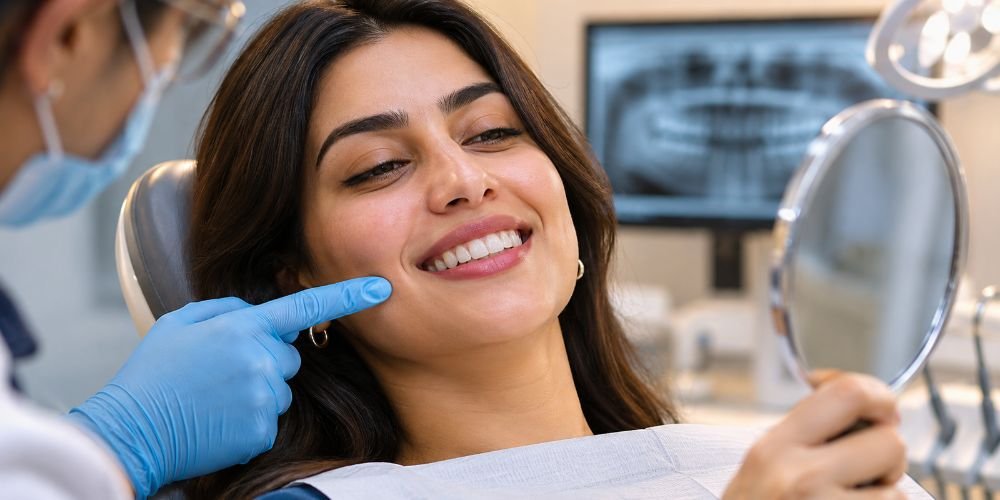
A beautiful smile can make a lasting impression, but not everyone feels confident about their teeth. Discoloured teeth, gaps, chipped edges, uneven teeth, worn enamel, or a gummy smile may affect how people feel when they smile, speak, or appear in photographs. Fortunately, modern dentistry offers several ways to improve the appearance of a smile while maintaining oral health and function.
A smile makeover is a personalised combination of cosmetic and restorative dental treatments designed to address different smile concerns. Depending on an individual’s dental condition, it may involve teeth whitening, dental veneers, orthodontic treatment, dental crowns, bonding, gum contouring, or other procedures.
If you are considering a smile makeover in Gurgaon, understanding the available treatments, their benefits, limitations, and the planning process can help you make a more informed decision.
At Dr. Gupta’s Dental Implant and Orthodontic Centre, smile improvement begins with understanding each patient’s dental concerns, oral health, expectations, and suitability for different treatment options. The goal is to create a smile that looks natural, feels comfortable, and supports long-term oral health.
What Is a Smile Makeover?
A smile makeover is a customised dental treatment plan that combines one or more procedures to improve the appearance of your teeth, gums, and overall smile. It may also address certain functional concerns, such as worn teeth, bite irregularities, or damaged dental structures, depending on the patient’s needs.
Unlike a single cosmetic procedure, a smile makeover considers the entire smile. Your dentist may evaluate:
- Tooth colour, shape, size, and alignment
- Gaps between teeth or crowded teeth
- Chipped, cracked, or worn teeth
- Gum line and gum symmetry
- Facial proportions and smile display
- Bite alignment and chewing function
- Existing restorations and overall oral health
A smile makeover does not follow the same treatment plan for everyone. Some people may benefit from professional teeth whitening alone, while others may require a combination of orthodontics, veneers, crowns, or gum treatments.
Which Dental Treatments Can Transform Your Smile?
Modern cosmetic dentistry offers several treatment options that can address different smile concerns. The most suitable procedure depends on your teeth, gums, bite, and desired outcome.
- Professional Teeth Whitening
Helps reduce stains and discolouration caused by foods, beverages, smoking, ageing, and other factors. Professional whitening can brighten natural teeth while helping the dentist assess sensitivity and suitability.
- Dental Veneers
Thin restorations placed over the front surface of selected teeth to improve colour, shape, size, and minor visible irregularities. Veneers may be porcelain or other suitable dental materials.
- Orthodontic Treatment
Braces or clear aligners can help correct crowded teeth, spacing, and certain bite problems. Treatment duration and appliance selection depend on the complexity of tooth movement.
- Dental Bonding
Tooth-coloured composite resin can be used to repair minor chips, improve small gaps, or reshape selected teeth. It may offer a conservative alternative to some other cosmetic procedures.
- Dental Crowns
Crowns cover and restore damaged, weakened, or heavily treated teeth. They can improve appearance while providing structural protection when clinically indicated.
- Gum Contouring
In suitable cases, gum contouring reshapes an uneven or excessive gum line to improve the visible proportions of the teeth. A proper evaluation of gum health and underlying structures is important.
- Dental Implants and Tooth Replacement
Missing teeth can affect the appearance of a smile, speech, and chewing. Dental implants, bridges, or other suitable tooth-replacement options may help restore the missing tooth and improve overall smile balance.
1. Professional Teeth Whitening: Brighten Stained Teeth
Tooth discolouration is one of the most common reasons people explore cosmetic dentistry. Teeth may become stained due to coffee, tea, certain foods, tobacco, ageing, or other causes.
Professional teeth whitening uses dentist-supervised whitening agents to reduce certain types of stains and improve tooth brightness.
What can teeth whitening help with?
- Yellow or stained teeth
- Surface discolouration
- Age-related darkening
- Stains from certain foods and beverages
Is teeth whitening suitable for everyone?
Not always. Whitening may not change the colour of crowns, veneers, fillings, or certain types of internal tooth discolouration. Patients with cavities, gum problems, or significant tooth sensitivity may need treatment or evaluation before whitening.
The dentist can recommend an appropriate whitening method and explain how to minimise sensitivity.
2. Dental Veneers: Improve Tooth Shape and Colour
Dental veneers are thin shells designed to cover the front surface of selected teeth. They are commonly considered when patients want to improve the appearance of teeth that are stained, uneven, slightly chipped, or irregularly shaped.
Depending on the clinical situation, veneers may help address:
- Uneven tooth shapes
- Certain visible stains that do not respond adequately to whitening
- Minor gaps between teeth
- Small chips or worn edges
- Selected cosmetic irregularities
Porcelain veneers are valued for their appearance and stain resistance, while composite veneers may offer different treatment and maintenance considerations.
However, veneers are not suitable for every patient. Some veneer procedures require removal of a small amount of enamel, and treatment may be irreversible. Your dentist should discuss the benefits, risks, maintenance requirements, and alternatives before proceeding.
3. Braces and Clear Aligners: Straighten Misaligned Teeth
Misaligned, crowded, or spaced teeth can affect the appearance of a smile and sometimes make cleaning more difficult. Orthodontic treatment can gradually move teeth into improved positions.
Common orthodontic options
Traditional braces: Brackets and wires apply controlled forces to move teeth. Braces can address many alignment and bite concerns, depending on the case.
Clear aligners: Transparent removable trays are designed to move teeth gradually. They may be suitable for selected mild to complex cases, depending on the orthodontic assessment and treatment system.
How can orthodontics improve a smile?
Orthodontic treatment may help:
- Reduce crowding
- Close or improve certain spaces
- Correct some bite irregularities
- Improve tooth alignment
- Create a more balanced dental appearance
If teeth are significantly misaligned, orthodontic treatment may be a more appropriate starting point than covering the teeth with veneers. A dentist or orthodontist can help determine whether braces, aligners, or another approach is suitable.
4. Dental Bonding: Repair Small Imperfections
Dental bonding uses tooth-coloured composite resin to repair or reshape selected teeth. It is often considered for minor cosmetic improvements.
Bonding may be used to:
- Repair small chips
- Improve the appearance of minor cracks
- Reshape uneven tooth edges
- Reduce the appearance of small gaps in suitable cases
- Improve the appearance of certain discolourations
One advantage of bonding is that it may preserve more natural tooth structure than some other cosmetic procedures. However, composite resin can stain, chip, or wear over time, so maintenance may be required.
5. Dental Crowns: Restore Damaged or Weak Teeth
Dental crowns are restorations that cover a tooth to restore its shape, strength, and appearance. They may be recommended for teeth that are severely damaged, weakened, extensively restored, or treated with root canal therapy when a crown is clinically indicated.
Crowns can be made using different materials, including ceramic, zirconia, and other dental materials selected according to the tooth’s position and functional requirements.
In a smile makeover, crowns may help restore damaged teeth and improve the overall appearance of the smile. However, because crown preparation can involve removing tooth structure, they should be recommended based on dental needs rather than appearance alone.
6. Gum Contouring: Create a More Balanced Gum Line
Sometimes the teeth are healthy and well-shaped, but the gum line appears uneven or covers more of the tooth surface than expected. This may make the teeth look shorter or the smile appear asymmetrical.
Gum contouring may be considered for selected patients with:
- Uneven gum margins
- Excessive gum tissue affecting tooth appearance
- Certain gummy smile concerns
- Irregular gum contours
A dentist must assess the gum tissue, tooth proportions, bone levels, and cause of the concern before recommending gum reshaping. Not every gummy smile requires gum surgery, and other treatment options may be appropriate depending on the underlying cause.
7. Dental Implants: Restore Missing Teeth and Smile Completeness
Missing teeth can affect the appearance of your smile, confidence, chewing ability, and sometimes speech. Depending on the condition of the jawbone and surrounding teeth, dental implants may be considered as a tooth-replacement option.
A dental implant is a fixture placed in the jawbone to support a replacement tooth. Once healing and integration are appropriate, a dental crown can be attached to restore the visible tooth.
How can dental implants help in a smile makeover?
- Replace missing teeth with a fixed restoration
- Restore the appearance of a complete smile
- Support chewing function
- Avoid relying on neighbouring teeth for support in certain treatment situations
- Help maintain the structure of the jawbone in the implant area
Implant treatment requires careful assessment of bone quality, gum health, medical history, and other factors. Not everyone is immediately suitable for implant placement, and some patients may require additional procedures or alternative tooth-replacement options.
What Dental Concerns Can a Smile Makeover Address?
A smile makeover may help improve several cosmetic and restorative concerns, depending on the treatments selected.
| Dental concern | Possible treatment options |
| Yellow or stained teeth | Professional teeth whitening, veneers in selected cases |
| Chipped front teeth | Dental bonding, veneers, crowns when indicated |
| Gaps between teeth | Orthodontics, bonding, veneers in selected cases |
| Crooked or crowded teeth | Braces or clear aligners |
| Uneven tooth shapes | Bonding, veneers, orthodontics |
| Worn-down teeth | Restorative treatment, crowns, bite assessment |
| Missing teeth | Dental implants, bridges, dentures |
| Uneven gum line | Gum contouring in selected cases |
| Damaged teeth | Bonding, crowns, or other restorative treatment |
The best treatment is not necessarily the one that makes teeth look the whitest or most uniform. A well-planned smile makeover should consider natural appearance, tooth preservation, healthy gums, function, and the patient’s expectations.
Who Is a Good Candidate for a Smile Makeover?
A smile makeover may be suitable for adults who want to improve the appearance of their teeth or address certain dental concerns. However, candidacy depends on the patient’s oral health and the procedures being considered.
You may be a potential candidate if you have:
- Stained or discoloured teeth
- Chipped, uneven, or worn teeth
- Gaps or spacing concerns
- Crowded or misaligned teeth
- Uneven gum appearance
- Missing teeth
- A desire to improve the overall appearance of your smile
Why oral health comes first
Before cosmetic treatment, the dentist may need to address:
- Tooth decay
- Gum disease
- Active dental infections
- Poor oral hygiene
- Certain bite-related concerns
- Teeth grinding or clenching
Treating these concerns first can help create a healthier foundation for cosmetic or restorative treatment and may reduce the risk of complications.
What Happens During a Smile Makeover Consultation?
A smile makeover should begin with a detailed consultation rather than immediately selecting a cosmetic procedure. The planning process helps the dentist understand your concerns and determine which treatments are clinically appropriate.
Step 1: Discuss your smile goals
You can explain what you would like to improve, such as tooth colour, shape, alignment, spacing, or missing teeth. You may also discuss what kind of smile appearance you prefer.
Step 2: Dental examination
The dentist examines your teeth, gums, bite, existing restorations, and overall oral health. X-rays or other diagnostic records may be recommended when clinically necessary.
Step 3: Smile assessment and treatment planning
Your dentist evaluates your smile proportions, tooth display, gum line, and other factors. A treatment plan may involve one procedure or several staged treatments.
Step 4: Understand your treatment options
You should be informed about the recommended treatments, alternatives, expected benefits, possible risks, limitations, costs, and maintenance requirements.
Step 5: Begin treatment
Once the plan is agreed upon and your oral health is suitable, the treatments may begin. Some procedures can be completed relatively quickly, while orthodontic or implant treatments may require several months or longer.
How Long Does a Smile Makeover Take?
The duration of a smile makeover depends on the number of procedures involved and the complexity of your dental condition.
| Treatment | General treatment timeline |
| Professional teeth whitening | Often completed over one or more sessions, depending on the method |
| Dental bonding | Often completed in a single appointment for selected teeth |
| Veneers | Usually involves consultation, preparation when required, and placement appointments |
| Dental crowns | Typically requires multiple steps or visits, depending on the workflow |
| Braces | Commonly takes months to years, depending on complexity |
| Clear aligners | Often takes several months or longer, depending on tooth movement |
| Dental implants | Can take several months or longer, depending on healing and additional procedures |
| Gum contouring | Depends on the procedure and healing requirements |
These are general estimates, not guaranteed timelines. Your dentist or orthodontist can provide a more accurate schedule after evaluating your teeth and planning your treatment.
How Much Does a Smile Makeover Cost in Gurgaon?
The cost of a smile makeover varies from patient to patient because there is no single standard treatment package.
The overall cost may depend on:
- Number of teeth involved
- Type of treatment required
- Material selected for veneers or crowns
- Complexity of orthodontic treatment
- Whether dental implants are required
- Additional procedures such as gum treatment
- Diagnostic records and follow-up appointments
For someone who needs only teeth whitening, the treatment cost may be different from a patient requiring veneers, orthodontics, crowns, or implants.
If you are exploring a smile makeover in Gurgaon, it is helpful to discuss the treatment plan and cost breakdown during your consultation. Understanding which procedures are essential, which are optional, and what maintenance may be needed can help you make a practical decision.
Why Choose a Personalised Smile Makeover?
Every smile is different. The shape of your teeth, gum line, facial features, bite, and personal preferences all influence how your smile looks. A treatment that works well for one person may not be appropriate for another.
A personalised smile makeover focuses on:
- Natural-looking results: Choosing tooth shapes, shades, and proportions that complement your appearance.
- Preserving natural teeth: Considering conservative treatment options whenever clinically appropriate.
- Healthy gums: Ensuring that gum health supports cosmetic and restorative procedures.
- Comfort and function: Considering your bite, chewing ability, and tooth function.
- Realistic expectations: Understanding what each treatment can and cannot achieve.
- Long-term maintenance: Planning for regular dental visits and care after treatment.
The aim is to enhance your smile without compromising the health of your natural teeth.
How to Maintain Your Smile After a Makeover
After completing your smile makeover, maintaining good oral hygiene and following your dentist’s recommendations are important for protecting your results.
Follow these everyday habits:
- Brush twice daily using a fluoride toothpaste.
- Clean between your teeth daily using floss or other recommended interdental cleaning aids.
- Attend regular dental check-ups and professional cleaning appointments.
- Avoid biting hard objects such as ice, pens, or hard shells with restored teeth.
- Limit frequent consumption of staining foods and beverages if you have whitening or cosmetic restorations.
- Wear a night guard if recommended for teeth grinding or clenching.
- Follow the maintenance instructions for veneers, crowns, aligners, implants, or other dental restorations.
Cosmetic restorations are not maintenance-free. Veneers, crowns, bonding, and implants may need professional monitoring, repairs, or replacement over time.
Smile Makeover in Gurgaon at Dr. Gupta’s Dental Implant and Orthodontic Centre
If you are unhappy with the appearance of your teeth or want to explore cosmetic dental options, a professional consultation can help you understand what may be possible.
At Dr. Gupta’s Dental Implant and Orthodontic Centre, patients can explore smile improvement options based on their dental condition, treatment needs, and expectations. Whether you are concerned about stained teeth, gaps, misalignment, chipped teeth, uneven gum lines, or missing teeth, the appropriate treatment approach depends on a comprehensive dental evaluation.
A smile makeover may involve teeth whitening, veneers, bonding, braces, clear aligners, crowns, gum treatments, dental implants, or a combination of procedures where appropriate.
If you are considering a smile makeover in Gurgaon, consult a dental professional to understand your options, the expected treatment timeline, potential risks, and long-term care requirements.
Your journey towards a healthier, more confident smile can begin with a simple consultation.
Frequently Asked Questions About Smile Makeovers
1. What is included in a smile makeover?
A smile makeover may include teeth whitening, veneers, dental bonding, orthodontic treatment, dental crowns, gum contouring, dental implants, or other restorative procedures. The treatment combination depends on the patient’s oral health, smile concerns, and goals.
2. Is a smile makeover a single dental procedure?
No. A smile makeover is a customised treatment plan that may combine several procedures or involve only one treatment, depending on the patient’s needs.
3. Can a smile makeover fix crooked teeth?
Yes, certain smile makeover plans include braces or clear aligners to improve tooth alignment. The appropriate orthodontic treatment depends on the degree of crowding, spacing, and bite irregularities.
4. Are veneers necessary for a smile makeover?
No. Veneers are only one option. Some patients may achieve their desired improvement through teeth whitening, bonding, orthodontics, or other treatments without veneers.
5. Is a smile makeover painful?
The level of discomfort depends on the procedures involved. Teeth whitening may cause temporary sensitivity, while restorative or surgical treatments may involve local anaesthesia. Your dentist can explain what to expect and how discomfort is managed for your planned treatment.
6. How long do smile makeover results last?
Results vary depending on the treatments performed, oral hygiene, lifestyle, dental habits, and maintenance. Whitening may require periodic touch-ups, bonding may need repair, and veneers or crowns may eventually need replacement.
7. Can a smile makeover improve confidence?
Improving concerns such as visible stains, gaps, chipped teeth, or misalignment may help some people feel more comfortable smiling and speaking. However, personal experiences vary, and cosmetic dental treatment should be based on realistic expectations.
8. How do I choose the right smile makeover treatment?
Start with a dental consultation and examination. Your dentist can assess your teeth, gums, bite, and smile concerns, then explain the available options, their benefits, limitations, risks, and costs.
9. Where can I get a smile makeover in Gurgaon?
You can consult Dr. Gupta’s Dental Implant and Orthodontic Centre to discuss smile makeover options and understand which dental treatments may be appropriate for your individual needs.
10. Is a smile makeover suitable for everyone?
Not necessarily. Patients with untreated cavities, gum disease, active infections, or certain bite problems may need treatment before cosmetic procedures. Suitability is determined through a dental examination.